


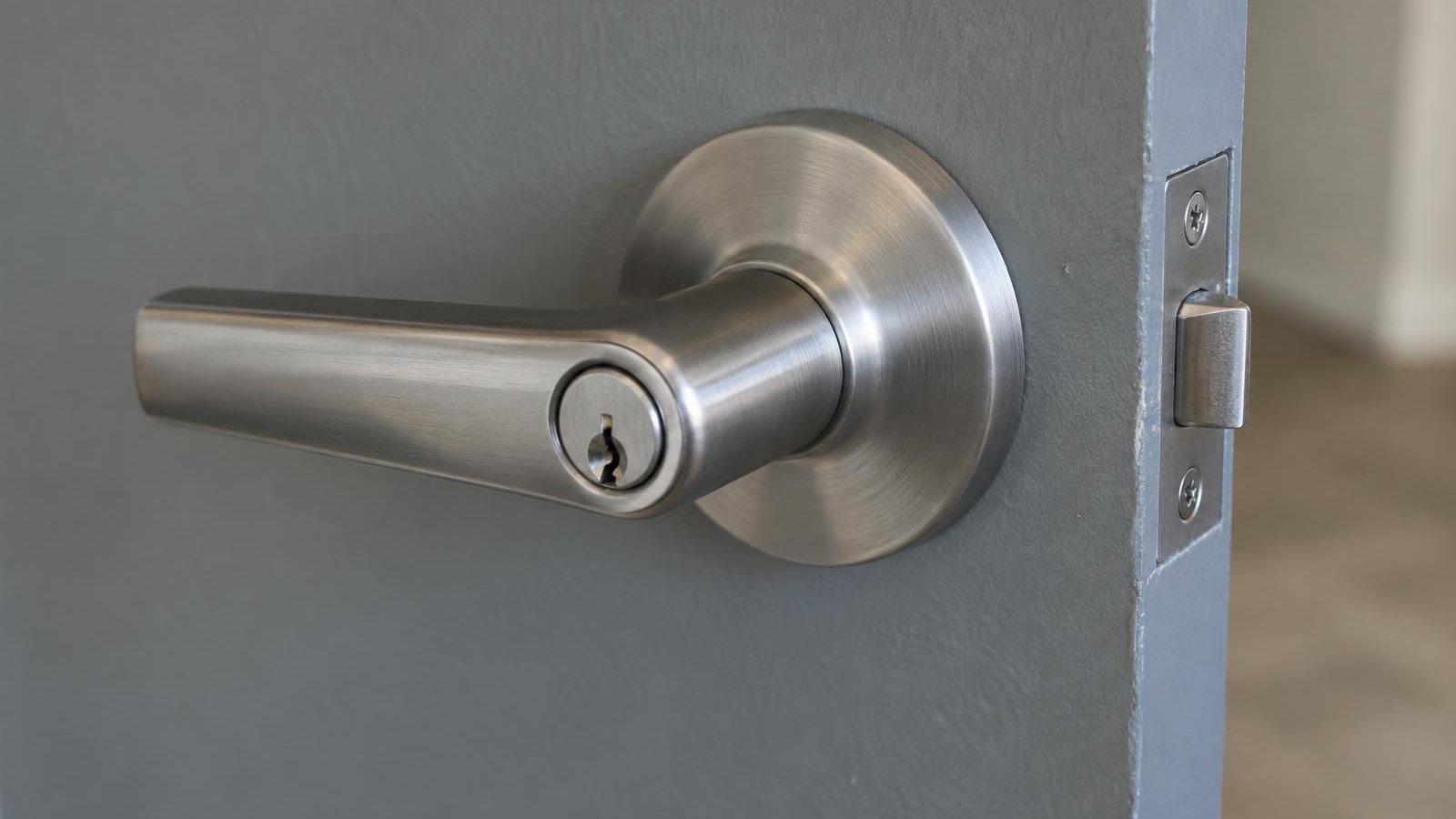
Classroom vs Storeroom Lock: Which Entry Function Fits?

Classroom vs storeroom lock selection comes down to whether the outside lever can stay unlocked after a keyholder changes its setting. A traditional classroom function permits that choice; a storeroom function keeps the outside lever inoperative and uses a key for entry. Decide the required access behavior before comparing finishes or choosing a replacement that looks like the existing lock.
Quick answer: Write the intended entry sequence in plain language, then compare it with the selected manufacturer's function description. Identify who may change the entry setting and whether that control must be available from inside the room. Use the operating description and documented suitability to guide the selection. For that review, Mills & Nebraska provides hardware specification support with an Architectural Hardware Consultant on staff.
Classroom vs storeroom lock: what changes at the outside lever?
The distinction is a selectable entry setting versus a fixed outside lever. A lock function describes what the hardware does from each side, including how a key or inside control affects it. The name identifies behavior, not simply the room where the lock belongs.
Allegion's lock-functions reference, revised January 2019 describes the mechanical arrangements this way:
- Traditional classroom: the outside cylinder lets a keyholder select locked or unlocked outside-lever operation.
- Storeroom: the outside lever remains inoperative; an authorized key retracts the latchbolt for entry.
- Interior operation: the inside lever remains available for exit in both descriptions.
Latchbolt means the projecting part that engages the strike to retain the closed door. The strike is the receiving hardware at the frame. Keep entry control separate from inside-lever operation when discussing the opening with the project team.
This comparison concerns the traditional mechanical functions in that reference. An electrified version, a different manufacturer's variation or another function with a similar name needs its own operating description. Ask for that description rather than extending these summaries to an unreviewed product.
When would a storeroom lock function fit the access plan?
Consider the storeroom pattern when the access plan calls for a key at each entry rather than periods of unrestricted outside-lever use. It removes the decision to leave that lever in an unlocked setting. That can be a useful distinction for a restricted room, but it does not settle all of the opening's requirements.
Allegion identifies secure storage and mechanical rooms among the applications for this function. Its electrical-room example is expressly limited to rooms that do not require panic hardware. Check panic-hardware requirements before applying that electrical-room example.
Ask the facility representative to describe a normal visit to the room. Who approaches from the corridor, what credential do they carry, and is an authorized person present to admit someone without a key? Record the intended sequence without adding a claim that the function will eliminate unauthorized entry.
The same reference notes that a closer may be needed so the opening is not left standing open. Review the specified commercial door closer as a separate component. Selecting a locking function does not by itself ensure that the door will close, engage its latch or remain physically secured.
When would a traditional classroom function fit the access plan?
Consider traditional classroom operation when an authorized keyholder needs to choose between controlled entry and a period of free outside-lever operation. The keyholder manages that setting from the outside cylinder. Check the function description for the location of locking control.
The Allegion reference also gives a common office corridor or suite entry as an example where key control is wanted without an inside thumbturn or push button. The function can therefore be considered outside education, subject to the actual opening review. An office label on a plan does not automatically require an office-function lock.
For a proposed use in education buildings, identify the intended security procedure before selecting hardware. Allegion's January 2019 reference states that most new schools have classroom security locks, office function locks or electrified locks. It also says classroom security locks are required by law for school classrooms in some jurisdictions. Check the requirements applicable to the project. Ask whether the responsible person needs to change entry control without opening the door. A traditional classroom function and a classroom security function answer that question differently.
Use a written description such as keyholder selects open access during scheduled use, in place of an unexplained classroom-lock label. Have the reviewer confirm whether that operating pattern matches the facility's instructions. The wording is a decision aid, not a substitute for the product's documented function.
How is classroom security different from traditional classroom operation?
Classroom security provides key-operated control of the outside lever from both the room and corridor sides. That is distinct from the traditional arrangement described above. The interior cylinder changes entry control; it should not be confused with a requirement to use a key to operate the inside lever for exit.
ASSA ABLOY's 2016 white paper, Choosing the Right Classroom Locks distinguishes these functions and explains that no single function is right for every classroom. It discusses the need to consider the opening's security requirements within the facility's wider approach.
If a proposed substitution changes where locking control is available, flag that change explicitly. A similar lever shape, the same finish or the word classroom in both descriptions does not show that the operating sequence is unchanged. Include both manufacturers' function descriptions in the comparison.
This is not a school-security plan or an interpretation of adopted code. Have the project designer determine the permitted configuration for the particular project. A functional comparison can clarify the question they must resolve without promising a safety outcome.
What should the commercial lock order identify?
Mills & Nebraska supplies commercial door locks, so describe the required operation alongside the selected hardware rather than sending only a room list. Its commercial lock offering is the relevant starting point for a supply request. Keep any proposed alternative visibly separate from the requested configuration.
The following is a recommended information set for reviewing the lock line:
- Opening identifier and room use.
- Required outside-lever behavior and the person authorized to change it.
- Required inside operation and location of any locking control.
- Manufacturer, model and complete function description.
- Existing door preparation or the proposed preparation detail.
- Project requirements and any unresolved substitution question.
Ask the supplier to identify the manufacturer's designation rather than assigning one from a photograph. ASSA ABLOY's white paper notes that bored and mortise functions can have minor operating differences. Read the actual description when moving between lock types instead of translating the function name alone.
For the rest of the opening package, the article on commercial door hardware for Florida buildings addresses broader coordination. Keep this selection focused on how the lock is intended to operate, while the project review addresses the other components and requirements.
How should you review an existing lock before replacing it?
Document the existing lock's behavior as well as its appearance. Ask the facility's authorized representative to explain the intended operation, then compare that account with the identified product documentation. Damage or alterations may change the observed behavior from the original function.
Record what the outside lever does with the key removed, whether a key can leave entry enabled, and what controls are present on the inside. If the observed behavior conflicts with the catalog description, have a qualified service professional investigate before treating it as the basis for an order.
For hardware specification review, bring the operating question together with the opening identifier, existing model and proposed replacement. Ask for clarification where the information is incomplete rather than requesting a supposedly equivalent lock on appearance alone.
FAQs
Can a classroom function be used outside a school?
Yes, the function name does not confine it to school rooms. Allegion's reference includes an office corridor or suite entry as a possible application. Decide whether the described entry-control pattern suits the opening, and have the project reviewer determine the appropriate configuration using the documented operating pattern.
Does the function name establish a fire rating?
A function name describes operation, not the complete opening's rating or approval. Identify the project requirement and request the relevant product and assembly documentation for review. Review the documented suitability of the proposed lock, door and hardware package.
Can matching finishes make two functions interchangeable?
A visual match does not demonstrate matching operation. Compare the outside and inside controls in each manufacturer's description and document any differences. If a proposed replacement changes who can manage entry or where that control is located, have that change reviewed before accepting the substitution.
Contact Mills & Nebraska with the intended entry sequence, opening identifier and proposed lock description for your commercial hardware request.
Products and Services in This Article
- Commercial Door LocksGrade 1 cylindrical and mortise locksets, keying and electrified options.
- Exit Devices & Panic HardwareRim, vertical rod and mortise devices, including UL listed fire exit hardware.
- Commercial Door HingesBall bearing, continuous, swing clear and power transfer hinges.
- Door Hardware SpecificationHardware consulting, scheduling and keying with an Architectural Hardware Consultant on staff.
Need Expert Guidance?
Our technical team is ready to help you navigate specifications, code requirements, and product selection for your project.