.jpg)
.png)




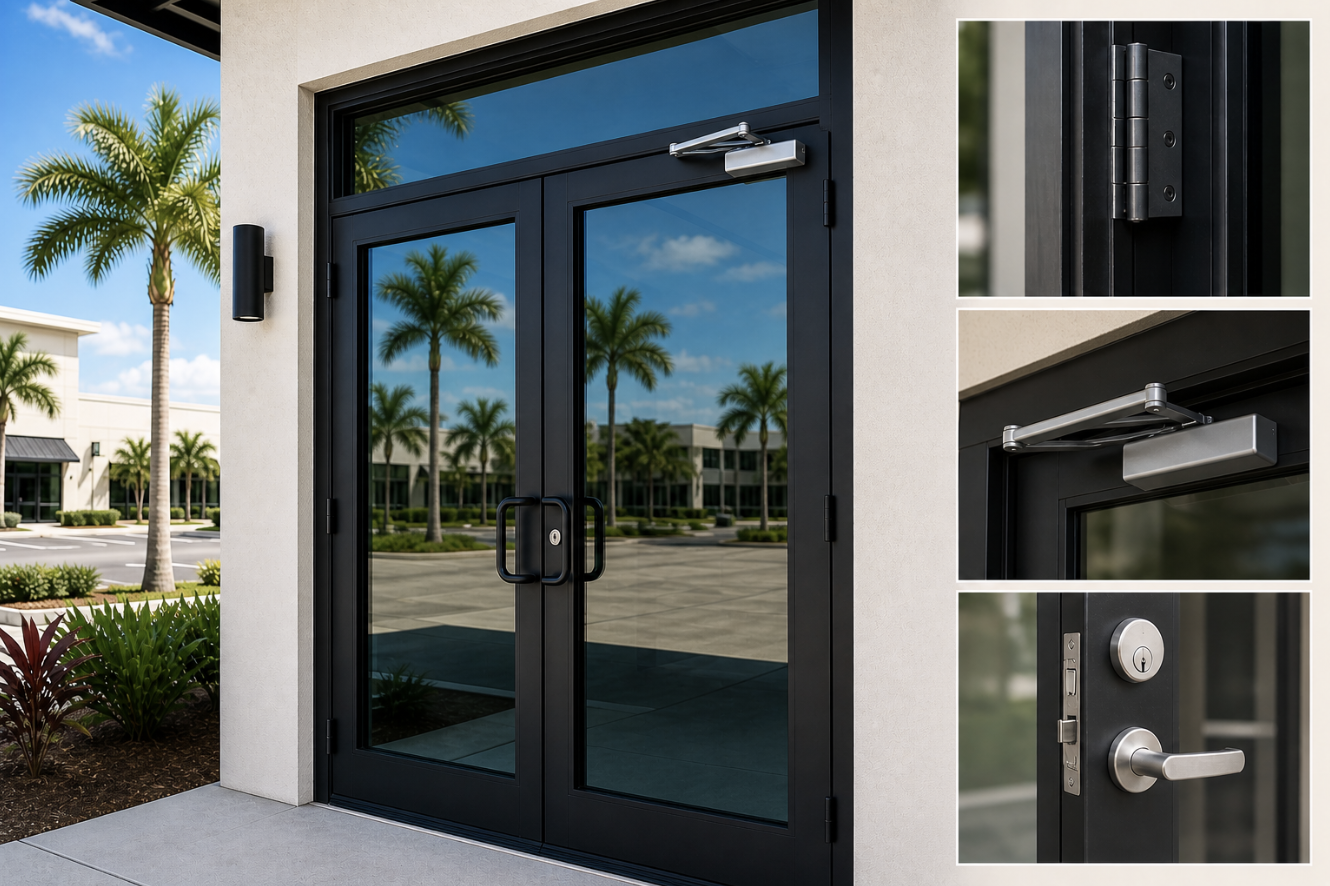
Commercial door hardware is one of the most critical components within Division 8 systems—and one of the most overlooked—in Florida construction projects. While doors and frames provide structure, it’s the hardware that ensures each opening functions safely, securely, and in compliance with code. From hinges and closers to locks and access control systems, properly selected and prepared hardware determines how a door performs every single day.
In Florida’s demanding environment, where humidity, high traffic, and strict building codes all come into play, choosing the right commercial door hardware is essential. Contractors and facility managers need solutions that are durable, compliant, and fully coordinated with the door and frame system to avoid costly delays and long-term issues.
Why Commercial Door Hardware Matters in Florida Construction
The Role of Hardware in Safety, Security, and Daily Operation
Commercial door hardware directly impacts how a building operates. Every time a door opens, closes, locks, or secures a space, hardware performs the critical functions behind the scenes. Components like hinges, a storefront door closer, and locking systems ensure smooth operation and controlled access.
Security is also heavily dependent on hardware. High-quality commercial locks, including solutions like Schlage commercial locks, help protect assets, employees, and occupants. Whether it’s a commercial keypad door lock for controlled entry or a simple commercial lever handle for interior access, hardware plays a central role in both convenience and protection.
How Florida’s Climate and Usage Impact Hardware Performance
Florida’s climate presents unique challenges for commercial door hardware. High humidity, salt air near coastal areas, and frequent use can all accelerate wear and corrosion. Hardware must be selected with durability in mind to withstand these conditions.
Exterior openings, such as storefronts, require heavy-duty components like a properly rated storefront door closer and corrosion-resistant locking systems. Interior applications—like commercial bathroom door locks or a commercial bathroom door handle—must also hold up to constant use while maintaining smooth operation.
Choosing hardware designed for these conditions reduces maintenance needs and extends the life of the entire door system.
The Cost of Improper or Incompatible Hardware
Using the wrong hardware—or mixing incompatible components—can lead to serious problems. Doors may fail to close properly, locks may not align, and hardware can wear out prematurely.
These issues often result in:
- Increased maintenance and repair costs
- Failed inspections due to non-compliance
- Security vulnerabilities
- Delays in project completion
Investing in properly specified and coordinated commercial door hardware helps avoid these risks and ensures reliable performance from day one.
Types of Commercial Door Hardware Used in Buildings
Hinges, Pivots, and Door Closers
Hinges and pivots support the weight and movement of the door, making them essential for long-term durability. Reinforced hinges prevent sagging and maintain alignment, especially in high-traffic environments.
Door closers, including storefront door closer systems, control the speed and force of door operation. Properly installed closers ensure doors close securely every time, which is critical for both safety and energy efficiency.
Locks, Latches, and Exit Devices
Locking systems are at the core of building security. Options range from traditional keyed systems to advanced commercial keypad lock solutions that allow controlled access without physical keys.
Popular solutions include:
- Commercial keypad door lock systems for secure entry
- Schlage commercial keypad lock options for reliability and ease of use
- Commercial storefront door locks for exterior security
- Commercial bathroom door locks designed for privacy and durability
Exit devices, often required for life-safety compliance, allow occupants to exit quickly in emergencies while maintaining security from the outside.
Access Control Systems and Security Hardware
Modern commercial buildings increasingly rely on electronic access control systems. A commercial electronic door lock can integrate with keycards, fobs, or mobile access systems to provide enhanced security and tracking.
These systems are commonly used in:
- Office buildings
- Healthcare facilities
- Government buildings
- Multi-tenant properties
When properly integrated, access control hardware enhances both security and operational efficiency.
Code Requirements for Commercial Door Hardware in Florida
Fire-Rated Hardware and UL Compliance
Fire-rated door assemblies require hardware that has been tested and approved as part of a complete system. This includes hinges, locks, closers, and exit devices.
UL compliance ensures that hardware performs correctly under fire conditions. Using non-compliant components can void the rating and lead to failed inspections.
ADA Accessibility and Hardware Standards
ADA standards require commercial doors to be accessible to all users. This includes proper hardware selection and placement.
Requirements include:
- Lever-style handles (commercial lever hardware) instead of knobs
- Appropriate mounting heights
- Doors that open with minimal force
- Smooth, consistent operation
Selecting compliant hardware ensures accessibility while avoiding costly modifications later.
Florida Building Code and Life-Safety Requirements
Florida Building Code sets strict standards for commercial door systems, including hardware performance. Exterior openings must meet wind-load requirements, while interior openings must support life-safety functions such as fire protection and emergency egress.
Properly specified hardware ensures that each door meets these requirements and passes inspection without delays.
Why Hardware Prep Is Critical for Commercial Doors
Factory Prep vs. Field Modifications
Hardware prep should be completed during fabrication—not in the field. Factory prep ensures precise placement of hinges, locks, and closers, reducing the risk of errors.
Field modifications often lead to:
- Misaligned hardware
- Damage to door finishes
- Voided fire ratings
Factory-prepped doors arrive ready for installation, improving efficiency and reliability.
Ensuring Proper Alignment and Long-Term Performance
Accurate hardware prep ensures that all components align correctly. This is essential for smooth operation and long-term durability.
Misalignment can cause:
- Doors that drag or stick
- Locks that fail to engage
- Excessive wear on hinges and closers
Proper preparation eliminates these issues and extends the life of the system.
Reducing Installation Errors and Inspection Issues
Prepped hardware simplifies installation and reduces the likelihood of errors. Installers can focus on proper mounting and alignment rather than making adjustments on-site.
This leads to:
- Faster installation timelines
- Fewer inspection issues
- Improved overall quality
Common Mistakes with Commercial Door Hardware
Mixing Incompatible Hardware Components
Combining hardware from different manufacturers or specifications can lead to compatibility issues. Even small differences can affect performance and compliance.
Using coordinated systems ensures that all components work together as intended.
Incorrect Installation or Hardware Placement
Improper installation can compromise both performance and safety. Hardware must be installed at the correct height, alignment, and reinforcement points.
Mistakes in placement can lead to operational failures and code violations.
Overlooking Code Requirements and Documentation
Failing to verify code requirements can result in costly delays. Missing documentation or incorrect hardware selection may lead to failed inspections.
Ensuring that all hardware meets code standards and includes proper documentation is essential for project success.
How Mills & Nebraska Supports Commercial Door Hardware Needs
In-House Hardware Prep and Coordination
Mills & Nebraska provides in-house hardware preparation to ensure precision and consistency. Every hinge, lock, and closer is prepped to match project specifications.
This eliminates guesswork and ensures doors arrive ready for installation.
Complete Door, Frame, and Hardware Packages
Rather than supplying individual components, Mills & Nebraska delivers complete systems that include doors, frames, and hardware. These coordinated packages improve compatibility and simplify installation.
From commercial storefront door locks to advanced commercial electronic door lock systems, every component is selected to work together seamlessly.
Contractor Support and Inspection-Ready Solutions
Mills & Nebraska works closely with contractors to ensure that every door system meets code requirements and is ready for inspection. Our support includes hardware selection, coordination, and documentation.
This proactive approach helps avoid delays and ensures successful project completion.
Conclusion: Reliable Hardware for Safe and Compliant Buildings
Commercial door hardware is a critical part of any building’s performance, safety, and security. From hinges and closers to locks and access control systems, every component plays a role in how a door functions.
In Florida’s demanding construction environment, properly specified and prepped hardware ensures compliance, reduces maintenance, and supports long-term reliability. By focusing on complete, coordinated systems, contractors can deliver better results and avoid costly mistakes.
Get Commercial Door Hardware from Mills & Nebraska
If your project requires dependable, code-compliant commercial door hardware, Mills & Nebraska is ready to help. Our team provides fully coordinated door, frame, and hardware solutions designed for efficient installation and long-term performance.
From commercial keypad door lock systems to complete entry solutions, we deliver hardware that meets the demands of Florida construction.
Contact Mills & Nebraska today to request a quote and get the right hardware solution for your next project.
FAQs (Frequently Asked Questions)
What is commercial door hardware?
Commercial door hardware includes all functional components of a door system, such as hinges, locks, closers, exit devices, and access control systems.
What types of locks are used in commercial buildings?
Common options include commercial keypad lock systems, commercial electronic door lock solutions, and traditional keyed locks like Schlage commercial locks.
Why is hardware prep important?
Hardware prep ensures that all components are correctly aligned and reinforced, reducing installation errors and improving long-term performance.
Are commercial doors required to meet ADA standards?
Yes. Commercial doors must meet ADA requirements, including accessible hardware like commercial lever handles and proper mounting heights.
Can commercial door hardware be customized?
Yes. Hardware can be tailored to specific applications, including security systems, access control, and specialized locking solutions for different areas of a building.