


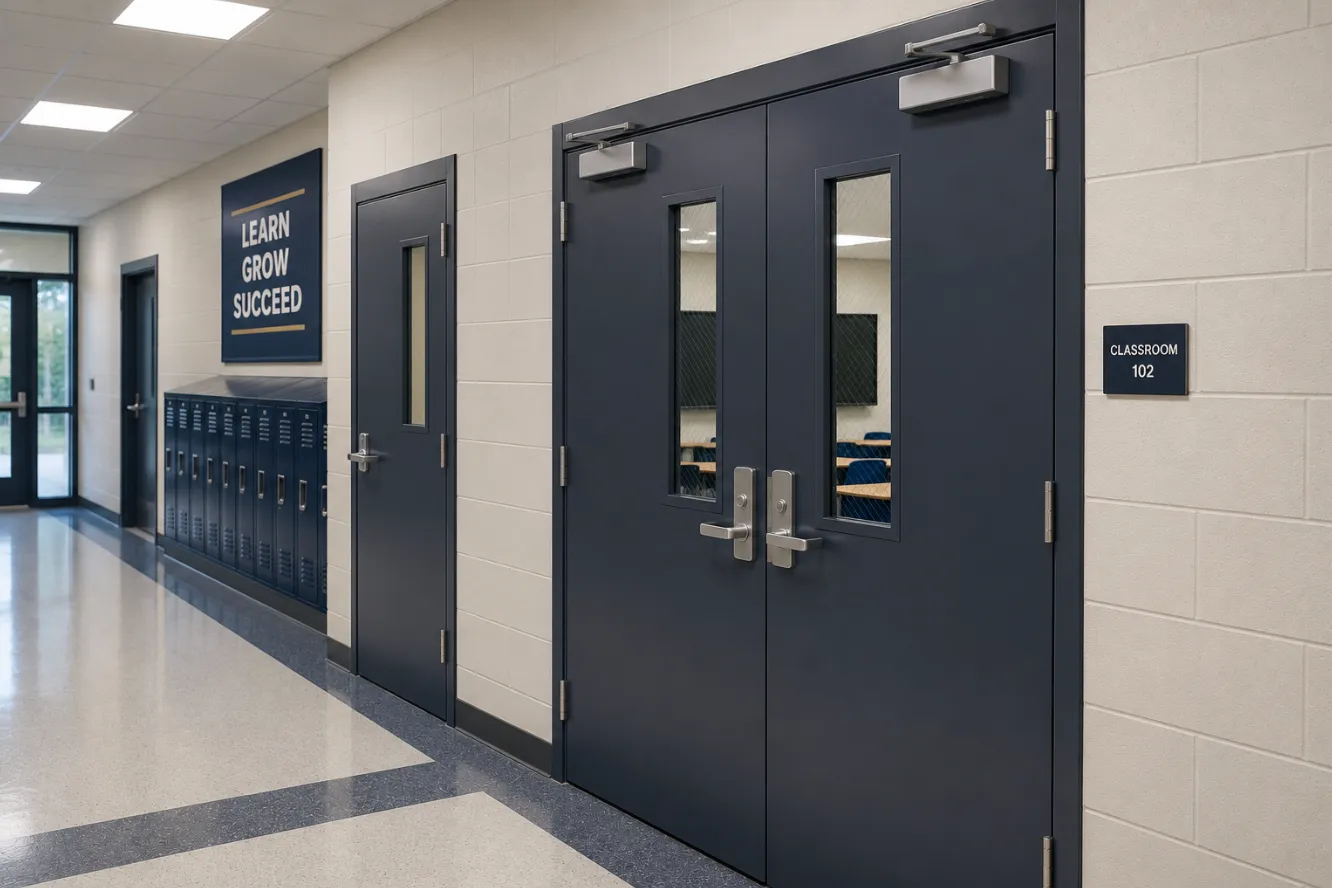
Choosing the Right Commercial Doors for Schools and Educational Facilities

Schools rely on safe, durable, and code-compliant building products to support students, staff, and visitors every day. Among the most important components of any educational facility are its commercial door systems, which help protect occupants, control access, withstand constant use, and meet stringent life safety requirements.
From K-12 schools and colleges to vocational campuses and administrative buildings, selecting the right commercial doors for schools involves much more than choosing a door material. Architects, general contractors, and facility managers must consider door frames, hardware, fire ratings, accessibility, security, and compliance with the Florida Building Code while ensuring every opening functions reliably for years to come.
Why Commercial Doors Are Essential for Schools and Educational Facilities
Educational buildings present unique challenges that differ from most commercial construction projects. Thousands of students and staff pass through entrances, hallways, classrooms, cafeterias, gymnasiums, and administrative offices every day, placing significant demands on every opening throughout the facility.
Selecting high-quality school doors helps improve safety, reduce maintenance costs, and support reliable building operations over the life of the facility.
Supporting Student Safety, Security, and Controlled Access
School security has become a primary consideration in modern educational design. Commercial doors help schools control access to specific areas while maintaining safe emergency egress.
Many educational facilities incorporate access control systems at main entrances, administrative offices, and restricted areas. These systems often work alongside commercial door hardware such as electronic locks, panic hardware, exit devices, door closers, and automatic door operators to create secure yet accessible school entrances.
Security vestibules are also increasingly common in new school construction. These entry sequences allow visitors to be screened before entering the main campus while maintaining controlled access throughout the building.
Durability for High-Traffic Educational Environments
Few commercial buildings experience the daily traffic of schools. Classroom doors, corridor openings, cafeteria entrances, gymnasium access points, and exterior school doors are opened and closed thousands of times throughout the school year.
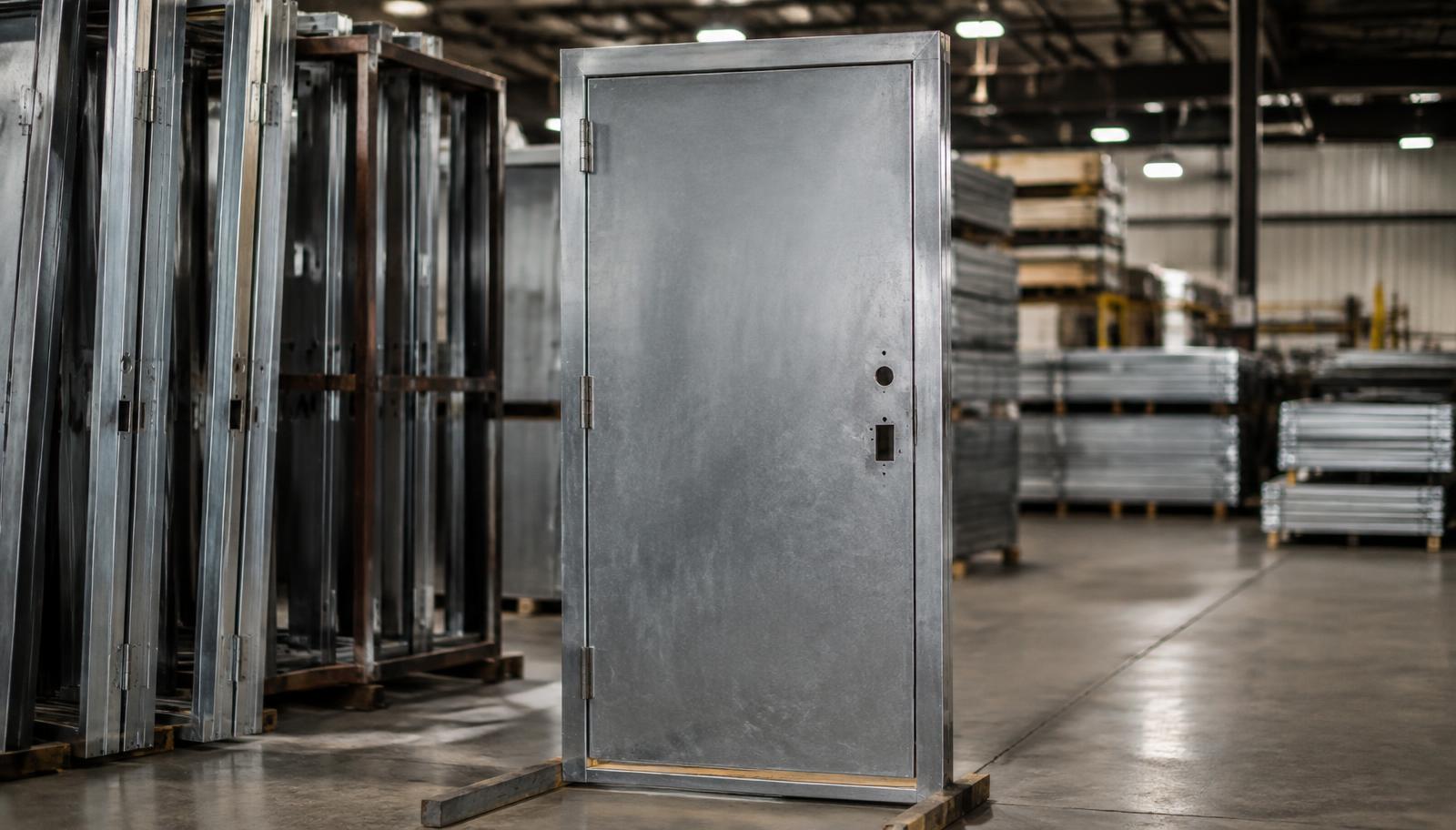
Because of this constant use, hollow metal doors and steel doors are commonly specified for educational facilities. Their strength and durability make them well suited for demanding environments where impact resistance and long-term performance are essential.
Reinforced hollow metal frames also provide the structural support needed to handle frequent operation while maintaining proper door alignment over time.
What Makes a Complete Commercial Door System for Schools
A commercial door opening consists of far more than the door itself. Each component must be designed to work together to satisfy structural, operational, and code requirements.
Coordinating these elements during the specification process helps reduce field conflicts and improve project coordination.
Commercial Doors, Frames, and Reinforced Construction
A complete commercial door system begins with properly matched commercial doors and hollow metal frames. Hollow metal doors and steel doors are commonly specified for educational facilities because they provide durability, security, and compatibility with commercial door hardware. Reinforced frames help support heavy-duty applications and long-term performance.
Hardware Prep for Locks, Closers, Exit Devices, and Access Control
Door hardware plays a significant role in both security and functionality. Commercial door hardware for schools often includes locks, door closers, panic hardware, exit devices, hinges, automatic door operators, and electronic access control components.
Preparing doors and frames for specified hardware during fabrication helps improve project coordination and reduces the need for field modifications.
In-house hardware preparation also helps ensure that all components are designed to function together as a complete opening solution rather than as individually sourced products.
Fire-Rated, Impact-Rated, and Specialty Door Solutions
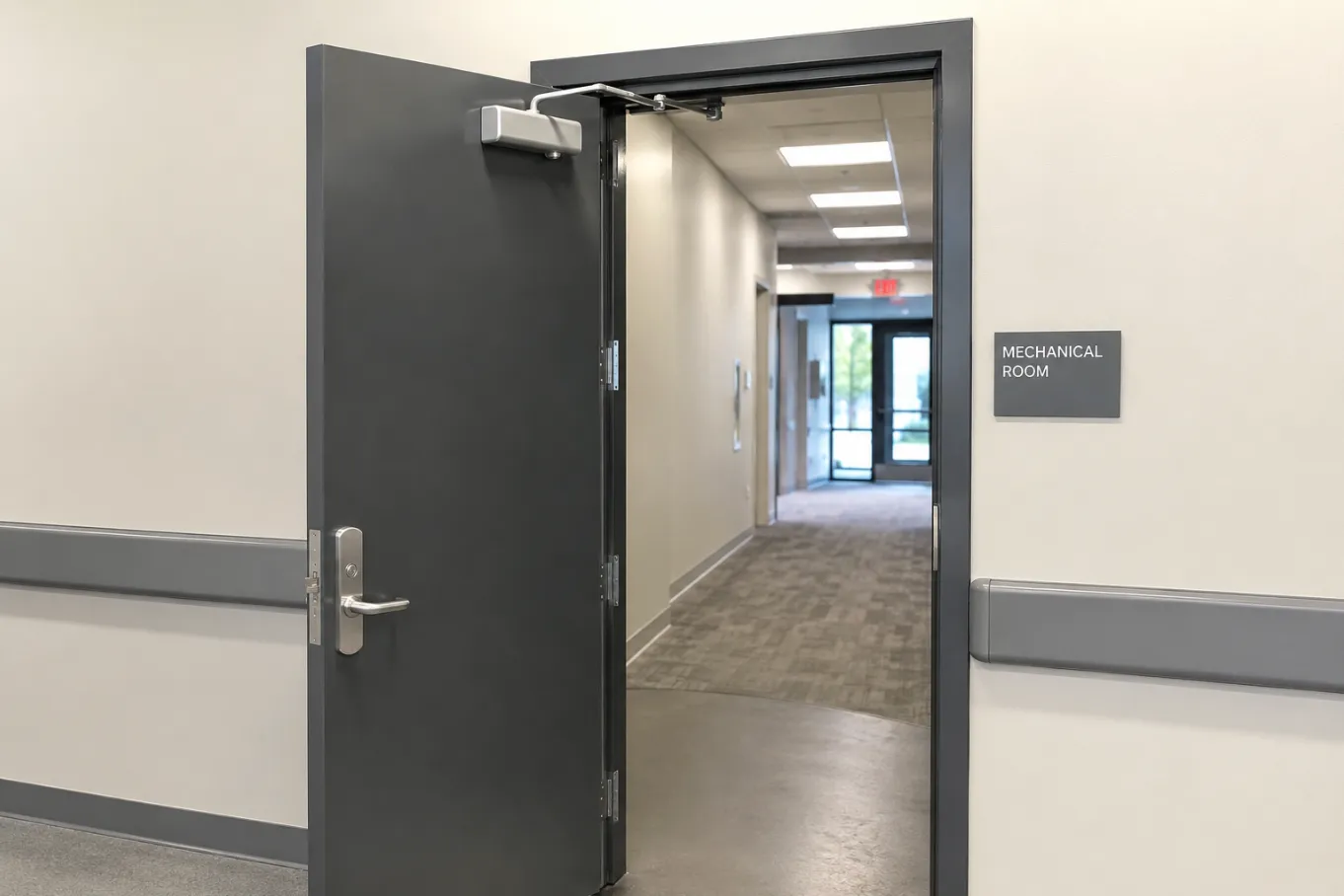
Different areas within a school require different levels of protection. Fire rated doors help compartmentalize buildings during emergencies by slowing the spread of fire and smoke where required by code. Mechanical rooms, stairwells, corridors, and other designated locations frequently require fire-rated assemblies.
In Florida, hurricane rated doors and impact rated doors may also be necessary depending on the building's location and occupancy requirements. These assemblies are designed to meet applicable wind-load and impact requirements under the Florida Building Code.
Code Requirements for Commercial Doors in Educational Facilities
Educational buildings are subject to strict regulations intended to protect occupants while ensuring accessibility and safe emergency egress.
Understanding these requirements early in the project helps minimize delays during permitting and inspections.
Fire-Rated Assemblies and Life-Safety Compliance
Life safety remains one of the primary objectives of commercial door design. Where required, fire-rated assemblies must consist of compatible fire rated doors, door frames, glazing components, and commercial door hardware that have been tested and listed together.
Panic or fire exit hardware is required on latching or locking egress doors serving assembly and educational (Group A and E) spaces with an occupant load of 50 or more, to facilitate rapid evacuation during emergencies.
Using properly coordinated assemblies helps support code compliance while reducing potential inspection issues.
ADA Accessibility Requirements for School Entrances
Schools must remain accessible to students, staff, and visitors with varying mobility needs.
ADA compliant doors are designed to provide appropriate clearances, opening forces, maneuvering space, and accessible hardware locations. Automatic door operators may also be incorporated at selected entrances to improve accessibility.
Proper hardware selection, door widths, threshold design, and opening configurations all contribute to a more inclusive educational environment.
Florida Building Code and Hurricane Resistance
Projects located in Florida must comply with the Florida Building Code, including provisions related to structural performance and wind resistance.
Depending on the project's location and exposure category, impact rated doors or hurricane rated doors may be required to satisfy regional wind load requirements.
Early coordination between architects, contractors, and Division 8 suppliers helps ensure the specified commercial door systems meet both performance expectations and applicable code requirements.
Common Challenges with Commercial Doors for Schools
School construction projects involve numerous trades, product manufacturers, and scheduling demands. Without proper coordination, commercial door openings can quickly become a source of costly delays.
Understanding common challenges allows project teams to avoid many issues before construction begins.
Mixing Incompatible Doors, Frames, and Hardware
One of the most frequent problems occurs when commercial doors, door frames, and hardware are specified independently without considering overall compatibility.
Even small differences between manufacturers or product preparations can lead to fitment issues, hardware conflicts, or field modifications that increase costs and delay project completion.
Specifying coordinated commercial door systems helps reduce these risks while improving consistency across the project.
Inspection Delays and Code Compliance Issues
Building inspections often focus closely on commercial door openings because they directly affect life safety and occupant protection.
Incorrect hardware, missing fire labels, incompatible components, or improperly prepared openings can result in inspection deficiencies that delay occupancy.
Coordinated specifications and code-compliant assemblies help reduce these challenges and support a smoother inspection process.
How Mills & Nebraska Supports School Construction Projects
Educational construction requires careful planning, coordinated specifications, and dependable product sourcing. Mills & Nebraska works with architects, general contractors, and construction professionals by supplying Division 8 and Division 10 products designed to support efficient project execution.
Mills & Nebraska supplies coordinated opening solutions that help simplify procurement and improve project coordination.
Coordinated Door, Frame, and Hardware Packages
Managing commercial doors, hollow metal frames, and commercial door hardware from multiple suppliers can create unnecessary complexity during construction.
Mills & Nebraska supplies complete door, frame, and hardware packages that are coordinated to work together, helping contractors streamline procurement while reducing compatibility concerns across the project.
This coordinated approach helps contractors receive compatible doors, frames, and hardware that are ready for efficient project execution.
In-House Hardware Prep and Code-Compliant Assemblies
Proper hardware preparation is an important part of delivering reliable commercial door systems.
Mills & Nebraska provides in-house hardware preparation for locks, exit devices, door closers, access control components, and other specified hardware, helping ensure products arrive prepared according to project requirements.
By coordinating doors, frames, and hardware as complete assemblies, project teams can better support code compliance while minimizing field modifications.
Conclusion: Commercial Door Systems Built for Safe Learning Environments
Selecting the right commercial doors for schools involves choosing a complete opening solution, not just the door itself. A complete system of compatible doors, frames, and hardware helps support safety, accessibility, durability, and code compliance throughout the building.
Mills & Nebraska supplies coordinated Division 8 door, frame, and hardware packages for educational facilities across Florida, helping contractors and architects source complete opening solutions that meet project requirements.
Get Commercial Doors for Schools from Mills & Nebraska
Educational facilities depend on coordinated Division 8 products that support safety, durability, and code compliance.
Mills & Nebraska supplies coordinated commercial door systems that include commercial doors, hollow metal frames, architectural hardware, hardware preparation, specialty doors, and Division 10 products for schools and other commercial construction projects throughout Florida.
Contact Mills & Nebraska today to discuss your school construction project and request a coordinated commercial door, frame, and hardware package.
FAQs
What are the best commercial doors for schools?
Many schools use hollow metal doors and steel doors because they provide excellent durability, security, and compatibility with a wide variety of commercial door hardware. The ideal choice depends on the location, occupancy, and performance requirements of each opening.
Why are hollow metal frames commonly used in educational facilities?
Hollow metal frames offer the strength needed to support heavy-use classroom doors, fire-rated assemblies, and reinforced hardware. They are designed for long-term durability in high-traffic educational environments.
Do schools require fire-rated doors?
Yes. Many areas within educational facilities require fire rated doors and associated assemblies to meet life safety requirements. The specific locations and ratings depend on the building's design and applicable building codes.
What hardware is commonly used on school doors?
School door hardware often includes locks, door closers, exit devices, panic hardware, hinges, access control components, and automatic door operators. The hardware selected depends on the function of each opening and applicable code requirements.
Why should commercial doors, frames, and hardware be specified together?
Coordinating commercial doors, door frames, and hardware as a complete system helps improve compatibility, reduce field conflicts, support code compliance, and simplify project coordination during commercial construction.
Products and Services in This Article
- Fire-Rated Doors & FramesFire-rated doors and frames from Mills & Nebraska in Orlando, FL: hollow metal, wood and fiberglass assemblies rated 20 minutes to 3 hours, labeled in house.
- Hollow Metal DoorsSteel doors for heavy-use, fire-rated and hurricane-rated openings.
- Exit Devices & Panic HardwareRim, vertical rod and mortise devices, including UL listed fire exit hardware.
- Commercial Door HingesBall bearing, continuous, swing clear and power transfer hinges.
Related Articles
Need Expert Guidance?
Our technical team is ready to help you navigate specifications, code requirements, and product selection for your project.