.jpg)
.png)




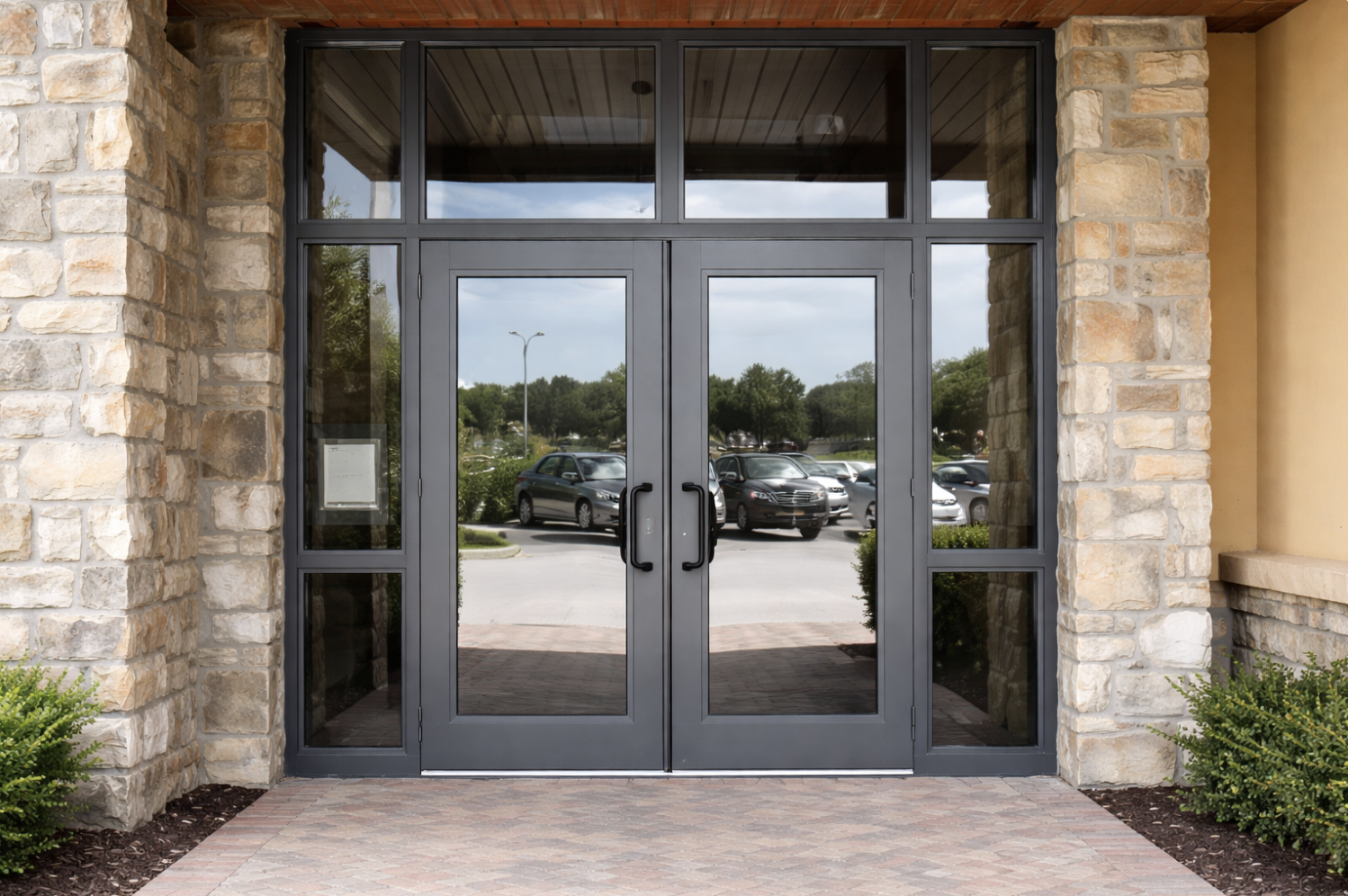
Commercial steel entry doors are a core Division 8 solution for secure, durable, and code-compliant exterior openings in modern construction. From office buildings to industrial facilities, these doors are designed to withstand heavy use, environmental exposure, and strict regulatory requirements.
Unlike light-duty alternatives, commercial metal exterior doors are engineered as complete systems—combining steel doors, reinforced steel frame assemblies, and precision hardware prep to ensure long-term performance. For contractors and facility managers, choosing properly fabricated commercial steel entry doors means fewer installation issues, faster inspections, and dependable operation for years to come.
Why Commercial Steel Entry Doors Are the Standard for Exterior Openings
Strength and Security for Commercial Buildings
Security is a top priority for any commercial building, and steel remains one of the strongest materials available for entry systems. Commercial steel entry doors provide superior resistance to forced entry, impact, and daily wear compared to other materials.
Whether installed as single openings or double steel exterior door configurations for commercial applications, these systems are built with reinforced cores and heavy-duty steel construction. This makes them ideal for protecting assets, controlling access, and maintaining safety across a wide range of facilities.
Durability in High-Traffic and Harsh Environments
Exterior commercial doors must perform in demanding conditions. High foot traffic, exposure to weather, and repeated use all contribute to wear over time.
Steel doors are designed to handle these challenges. Unlike wood or lighter materials, they resist warping, cracking, and structural fatigue. When paired with properly finished surfaces and reinforced hardware locations, commercial steel entry doors maintain their performance even in harsh environments such as loading docks, service entrances, and industrial access points.
Long-Term Performance Compared to Other Door Materials
When evaluating lifecycle performance, steel consistently outperforms many alternative materials. While wood doors may offer aesthetic appeal, they require more maintenance and are more susceptible to environmental damage. Aluminum may resist corrosion but can lack the structural strength required for high-security openings.
Commercial steel entry doors provide a balance of strength, longevity, and reliability. With proper fabrication and installation, they maintain alignment, resist damage, and support consistent operation over extended periods—reducing maintenance costs and minimizing downtime.
What Makes a Complete Commercial Steel Entry Door System
Steel Doors, Frames, and Reinforced Construction
A commercial steel entry door is only as strong as the system supporting it. This includes the door itself, the steel frame, and the reinforcements built into both components.
Reinforced steel doors are designed to accommodate heavy-duty hardware, louvers, and glazing where required. The steel frame provides structural support, anchoring the door securely to the surrounding wall. Together, these elements form a durable opening capable of handling both daily use and environmental stress.
The Importance of Hardware Prep and Compatibility
Hardware prep is a critical part of commercial door fabrication. Hinges, locks, strikes, and door closers must be precisely located and reinforced to ensure proper operation.
Improper hardware prep can lead to misalignment, premature wear, and installation delays. Prepping commercial steel entry doors in a controlled environment ensures that every hinge location, lock cutout, and reinforcement aligns with the intended hardware set—eliminating guesswork in the field.
Door, Frame, and Hardware as a Coordinated Assembly
A commercial door system should never be treated as separate parts. The door, frame, and hardware must function together as a coordinated assembly.
For example, a commercial steel entry door paired with an incompatible frame or improperly sized hardware can compromise performance and code compliance. When all components are fabricated and prepared as a system, the result is a door that installs efficiently, operates smoothly, and meets required standards.
Code Requirements for Commercial Steel Entry Doors
Fire-Rated Assemblies and UL Labeling
Many commercial steel entry doors are required to function as fire door assemblies. These systems must be fabricated and installed according to tested standards, with proper UL labeling visible and intact.
A fire door is more than just a steel panel—it includes the frame, reinforcements, and hardware as part of a certified assembly. Any deviation, such as unapproved modifications or missing labels, can result in failed inspections and safety risks.
Florida Building Code and Wind Load Compliance
In Florida, exterior openings must meet strict building code requirements for wind load and structural performance. Commercial metal exterior doors must be selected based on opening size, exposure conditions, and required pressure ratings.
Properly specified commercial steel entry doors help maintain building envelope integrity during high-wind and storm events. Matching the door system to the building’s design criteria is essential for compliance and long-term performance.
ADA Accessibility and Hardware Requirements
Accessibility is a key consideration for all commercial doors. ADA requirements dictate clear opening widths, hardware height, and ease of operation.
Commercial steel entry doors must be fabricated and prepped to accommodate compliant hardware—such as lever handles and properly mounted door closers—ensuring that the door remains accessible to all users.
Hardware Prep for Commercial Steel Entry Doors
Hinge Reinforcements, Lock Prep, and Strike Alignment
Proper hinge reinforcement is essential for supporting the weight of a steel door. Reinforced hinge locations prevent sagging and ensure long-term alignment, even in high-traffic environments.
Lock preparation and strike alignment must also be precise. Misaligned hardware can cause doors to bind, fail to latch, or wear prematurely. Accurate fabrication ensures that all components function together seamlessly from day one.
Door Closers, Exit Devices, and Access Control Integration
Modern commercial doors often incorporate advanced hardware such as door closers, exit devices, and access control systems. These components must be integrated into the door during fabrication—not improvised on-site.
Prepped commercial steel entry doors allow for smooth installation of these systems while maintaining performance and security. This is especially important in facilities that require controlled access or emergency egress functionality.
Reducing Field Modifications with Prepped Doors and Frames
Field modifications are one of the leading causes of delays and performance issues in commercial construction. Cutting, drilling, or adjusting doors on-site can compromise structural integrity and void ratings.
By using prepped commercial doors and frames, contractors can reduce installation time, improve accuracy, and avoid unnecessary rework. This approach leads to faster project completion and more reliable results.
Common Applications for Commercial Steel Entry Doors
Office Buildings and Retail Entrances
Office buildings and retail spaces require commercial steel entry doors that balance security, durability, and professional appearance. These openings often serve as the primary access point for employees, customers, and visitors, making performance and reliability critical.
Steel doors provide consistent operation under frequent use while maintaining a clean, professional look. Whether used as standard entry points or as double steel exterior doors commercial configurations, they support both functionality and long-term durability in high-visibility environments.
Industrial and Warehouse Facilities
Industrial and warehouse environments place extreme demands on commercial doors. Frequent movement of equipment, exposure to the elements, and heavy usage require doors that can withstand impact and maintain structural integrity.
Commercial metal exterior doors are commonly used in these settings due to their strength and resistance to wear. Steel doors with reinforced cores, heavy-duty hinges, and optional features like a louver for ventilation are ideal for service entrances, loading areas, and secured access points.
Healthcare, Education, and Government Buildings
Facilities such as hospitals, schools, and government buildings require commercial steel entry doors that meet strict safety and code requirements. These openings often function as fire door assemblies, requiring proper labeling and compliance with life-safety standards.
Steel doors provide the durability needed for high-traffic environments while supporting accessibility, security, and fire-rated performance. Their ability to integrate with specialized hardware makes them a reliable solution for these critical facilities.
Common Mistakes in Commercial Steel Entry Door Selection
Mixing Incompatible Doors, Frames, and Hardware
One of the most common issues in commercial construction is combining components that were not designed to work together. A steel door paired with an incompatible steel frame or mismatched hardware can lead to operational problems and failed inspections.
Commercial steel entry doors must be specified as complete systems. Ensuring compatibility between the door, frame, and hardware helps maintain performance, safety, and code compliance.
Improper Sizing or Frame Conditions
Incorrect sizing is another frequent issue. If a door does not match the actual opening conditions, installation becomes difficult and performance suffers.
Existing frame conditions also play a major role. Reusing damaged or misaligned frames can lead to binding, improper clearances, and premature wear. Proper evaluation and accurate fabrication are essential to ensure a successful installation.
Overlooking Code Requirements and Documentation
Failing to verify code requirements or documentation can delay a project significantly. Missing UL labels, incorrect fire ratings, or lack of compliance with Florida Building Code can result in failed inspections and costly rework.
Ensuring that commercial doors meet all applicable standards before installation helps avoid these issues and keeps projects on track.
How Mills & Nebraska Delivers Commercial Steel Entry Door Solutions
In-House Hardware Prep and Fabrication
Mills & Nebraska performs in-house fabrication and hardware prep to ensure every commercial steel entry door meets project specifications and code requirements. From hinge reinforcements to lock preparation, each door is built to match the required specifications.
This controlled fabrication process eliminates common field issues and ensures that every door arrives ready for installation.
Code-Compliant Door, Frame, and Hardware Packages
Rather than supplying individual components, Mills & Nebraska delivers complete door, frame, and hardware packages. These coordinated systems are designed to meet fire-rated requirements, accessibility standards, and Florida Building Code criteria.
Providing a complete assembly reduces the risk of incompatibility and simplifies the installation process for contractors.
Reliable Supply and Contractor Support Across Florida
Timely delivery and dependable support are essential in commercial construction. Mills & Nebraska works closely with contractors, architects, and project teams to ensure that commercial steel entry doors are delivered on schedule and aligned with project requirements.
From initial specification to final installation readiness, their team supports projects with responsive communication, accurate submittals, and dependable delivery
Conclusion: Steel Entry Doors Built for Security and Compliance
Commercial steel entry doors remain the industry standard for exterior openings requiring security, durability, and code compliance. When properly fabricated and installed as complete systems, they provide long-term performance, improved security, and reliable operation in demanding environments.
By focusing on coordinated assemblies—door, frame, and hardware—contractors can reduce installation challenges, pass inspections efficiently, and deliver high-quality results.
Get Commercial Steel Entry Doors from Mills & Nebraska
If your project requires durable, code-compliant commercial steel entry doors, Mills & Nebraska provides the expertise and support needed to get it right.
From steel doors and frames to precision hardware prep and complete system coordination, their team delivers solutions built for performance and compliance.
Contact Mills & Nebraska today to request a quote and get commercial steel entry doors tailored to your project’s requirements.
FAQs (Frequently Asked Questions)
What are commercial steel entry doors?
Commercial steel entry doors are heavy-duty door systems designed for exterior commercial openings. They are typically fabricated from reinforced steel and paired with a steel frame and commercial door hardware to provide security, durability, and code compliance.
Why are steel doors used for commercial entry applications?
Steel doors are used because they offer superior strength, impact resistance, and long-term durability compared to wood or aluminum. They are ideal for high-traffic environments and exterior openings where security and performance are critical.
Do commercial steel entry doors need to be fire-rated?
Some commercial steel entry doors must be fire-rated depending on their location within a building. Fire door assemblies must include the door, frame, and hardware as a tested and labeled system to meet code requirements.
What is included in a complete commercial steel entry door system?
A complete system includes the steel door, steel frame, and all necessary hardware such as hinges, locks, door closers, and exit devices. These components must be properly prepped and coordinated to function as a compliant assembly.
Can commercial steel entry doors be customized?
Yes. Commercial steel entry doors can be customized with features such as louvers, vision panels, reinforced hardware prep, and configurations like double steel exterior doors commercial setups. Custom fabrication ensures compatibility with specific project requirements.
Why is hardware prep important for commercial doors?
Hardware prep ensures that hinges, locks, and other components are accurately installed and reinforced during fabrication. This reduces field modifications, improves installation efficiency, and ensures long-term performance.