


Door Core Types: Wood and Hollow Metal Cores Compared

Door core types describe what sits between the two faces of a commercial door, and that choice sets its weight, how well it holds hinge and closer screws, and whether it can carry a fire label. Wood doors are built around particleboard, structural composite lumber, fire-rated or hollow honeycomb cores, while hollow metal doors use honeycomb, polystyrene, polyurethane, steel stiffened or temperature rise cores. Pick the core from the opening's traffic, rating and hardware before you pick a face finish.
Quick answer: For busy wood openings with closers or exit devices, specify structural composite lumber; use particleboard for moderate traffic and a rated core wherever the opening needs a label. For hollow metal, choose among honeycomb, polystyrene, polyurethane foam, steel stiffened and temperature rise cores, matching insulation, duty level and any fire rating to the opening. Mills & Nebraska supplies wood and hollow metal doors with the core matched to the opening, along with the frame and hardware.
What is a door core?
A door core is the internal material bonded between the face skins or veneers. On a wood door you see only the veneer or laminate; on a hollow metal door you see only the steel skin. The core underneath decides most of the door's real performance. Manhattan Door, one of the wood door makers on our partner list, puts it plainly: the core influences weight, durability, fire resistance and sound control.
What are the main wood door core types?
Commercial wood doors fall into four core families, and each one answers a different job.
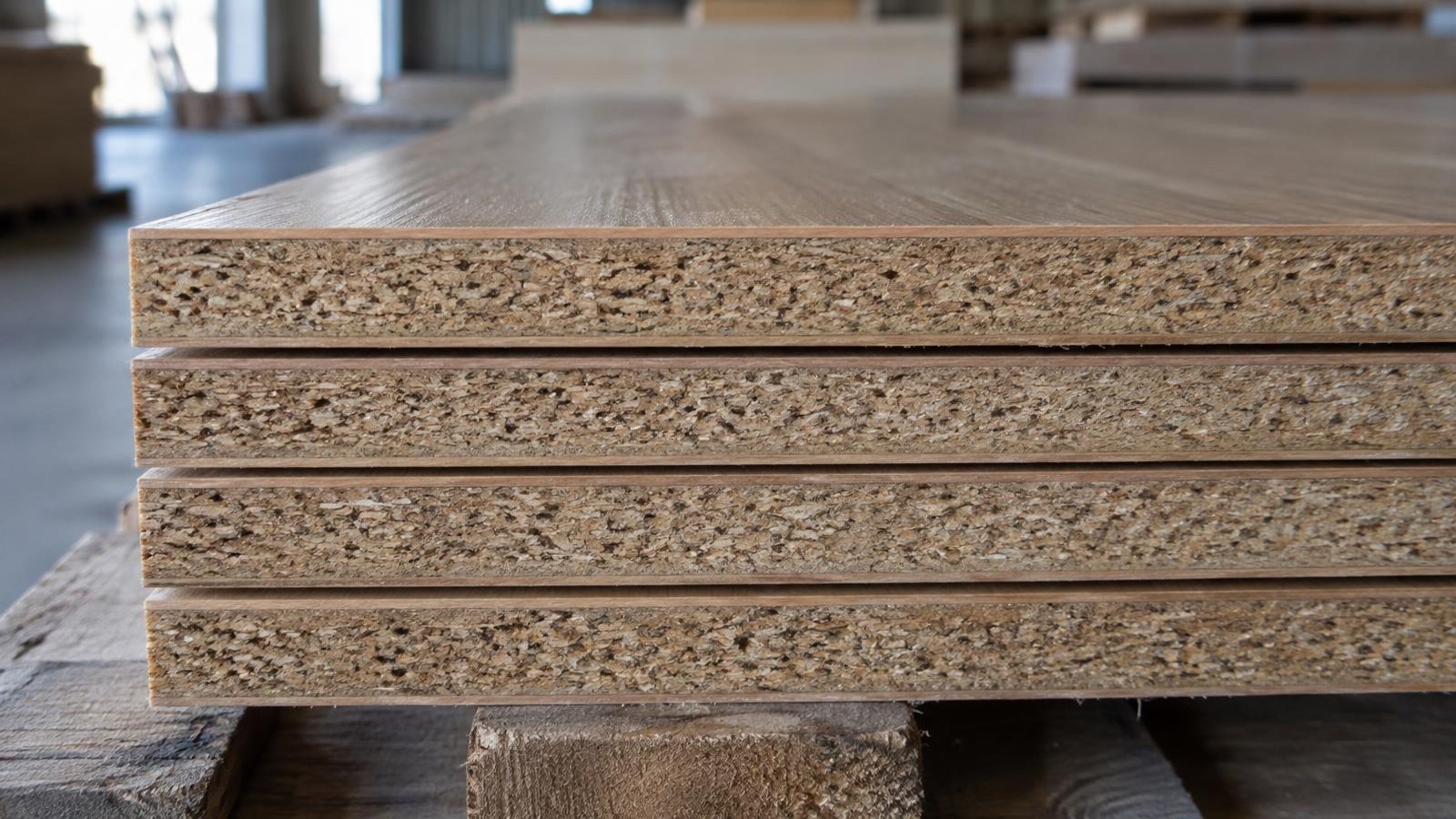
- Particleboard: compressed wood particles forming a solid slab. Manhattan Door recommends it where foot traffic is moderate and the budget is tight.
- Structural composite lumber (SCL): wood strands bonded with resin into a dense, uniform core with stronger screw holding and better warp resistance than particleboard, suited to heavy use in offices, hotels and shopping centers.
- Fire-rated cores: special materials that resist heat transfer, offered by that manufacturer in 20, 45 and 90 minute five-ply constructions.
- Hollow honeycomb: corrugated fiberboard that keeps weight and cost down, for interior rooms where sound control matters less.
Some manufacturers also sell a lightweight solid core that sits between hollow and solid. Ask for the data sheet before you treat any proprietary core as an equal to SCL.
Particleboard or SCL for a commercial wood door?
Choose SCL for high-traffic doors in constant use, since Manhattan Door credits it with superior screw holding and warp resistance. Choose particleboard for doors that see moderate foot traffic on a tighter budget. See our wood doors page for the commercial wood doors we supply, and the veneer door article covers species and cut.
What core goes inside a hollow metal door?
Ceco Door's hollow metal door line, a partner brand, shows the steel door cores offered and what several of them are built to do:
- Honeycomb: listed by Ceco among its standard hollow metal core choices.
- Polystyrene: Ceco's Legion doors use it for energy efficiency and impact resistance.
- Polyurethane foam: an insulated core; Ceco publishes a 0.38 U-value for its polyurethane core in one thermal break frame.
- Steel stiffened: Ceco's Medallion Series adds fiberglass insulation and is rated for heavy-duty to maximum duty use.
- Temperature rise: Ceco's Fuego door uses a mineral fiber core that keeps the unexposed side to a maximum of 250 degrees F during the first 30 minutes of the fire test.
When the energy design for an exterior opening names an R or U factor, that number points you to an insulated core. Browse gauges and constructions on our hollow metal doors page.
How does the core affect a fire-rated opening?
A fire label belongs to the tested door construction, so the core is part of what earns the rating rather than an option you swap later. That is why ratings are an attribute of the whole opening: the door, the frame and the hardware all have to match the listing. Start with the rating on the drawings, then pick a core the manufacturer lists for that duration. Our fire-rated openings page and the fire ratings resource walk through durations and labels.
How do you write the core into a door schedule?
Put the core in the door type column or the door specification, not in a general note, so the submittal and the order match the drawings. Name the core family (for example SCL, particleboard, polystyrene or steel stiffened), the rating if any, and any blocking needed for surface hardware. If a hardware set adds a closer or exit device late in design, recheck that the core and blocking still support it.
Next steps
Send the door schedule and hardware sets together, and an Architectural Hardware Consultant on our team can check each core against the hardware it has to carry. Frames are fabricated in house at our 36,000 sq ft Orlando facility.
FAQs
Is a solid core door the same as a fire-rated door?
No. Solid core describes a dense core such as particleboard or SCL, while a fire rating comes from a tested and labeled construction. A solid core door without a label is not rated, so confirm the label and duration on the submittal rather than assuming density equals a rating.
Are hollow core doors used in commercial buildings?
Yes, in limited places. Honeycomb wood doors keep weight and cost low for interior rooms where sound control is not critical, and honeycomb steel doors serve openings that need no high thermal insulation. For corridors, heavy traffic or hardware that takes heavy screw loads, a solid or stiffened core is the better fit.
Which steel door core is best for an exterior door in Florida?
Start with the R or U factor the energy design names, then compare insulated cores such as polystyrene and polyurethane foam against the manufacturer's published values. Wind performance is a separate question tied to the tested opening, so confirm the product approval for the full assembly.
Can a door core be changed after the doors are ordered?
Not in the field. The core is built into the door at the factory, and on rated doors it is part of the labeled construction. Changing it means reordering the door, which is why the core belongs in the door schedule before submittals are approved.
Contact Mills & Nebraska to match every door core in your schedule to its traffic, rating and hardware.
Products and Services in This Article
- Fire-Rated Doors & FramesFire-rated doors and frames from Mills & Nebraska in Orlando, FL: hollow metal, wood and fiberglass assemblies rated 20 minutes to 3 hours, labeled in house.
- Hollow Metal DoorsSteel doors for heavy-use, fire-rated and hurricane-rated openings.
- Wood DoorsCustom architectural and prehung wood doors, fire-rated to 90 minutes.
Need Expert Guidance?
Our technical team is ready to help you navigate specifications, code requirements, and product selection for your project.