.jpg)
.png)




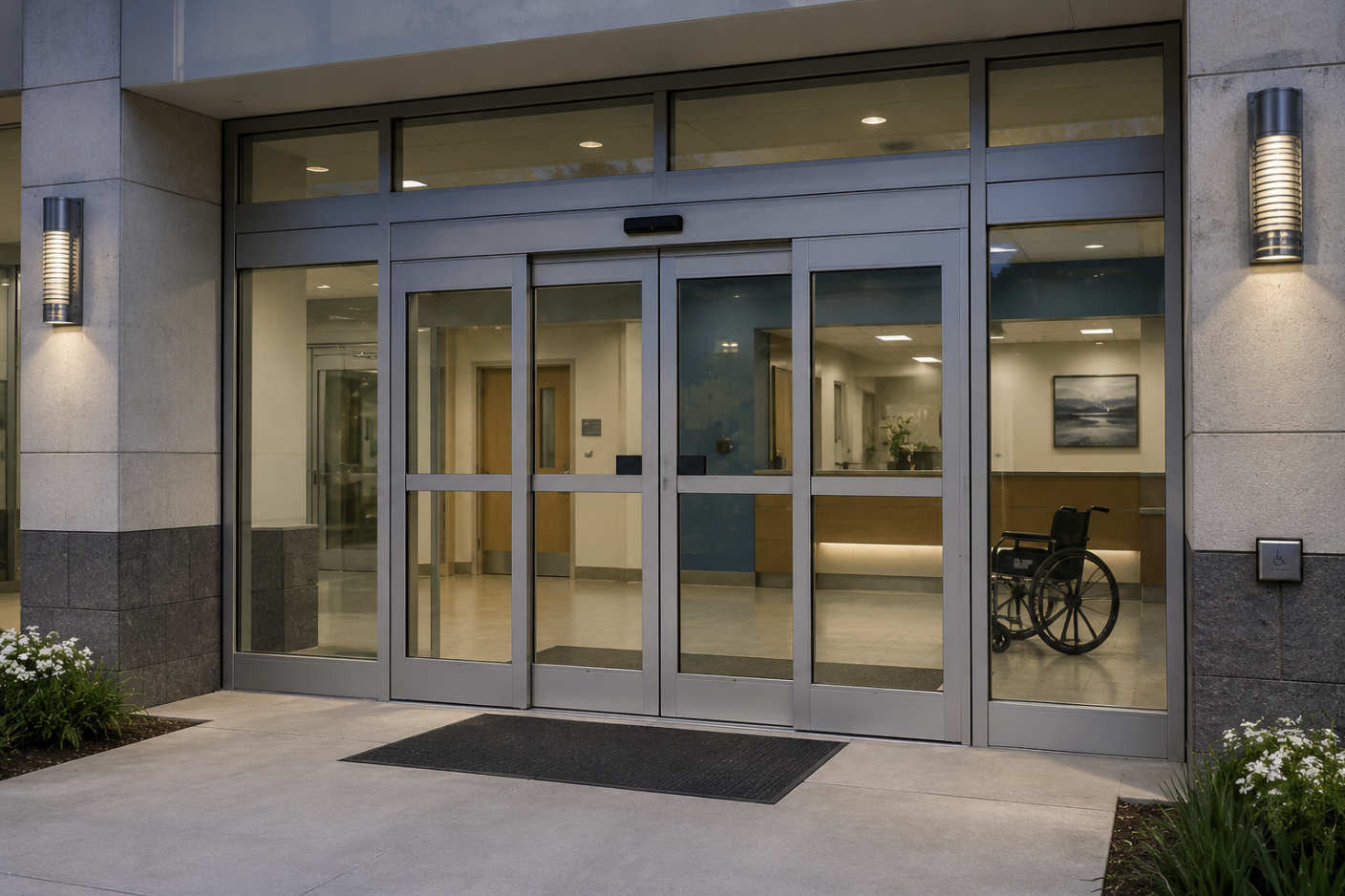
Exterior doors for hospitals play a vital role in healthcare facilities where safety, accessibility, security, and continuous operation are essential. Unlike standard commercial building entrances, hospital exterior doors must accommodate around-the-clock activity, support emergency services, withstand heavy use, and comply with strict building and life-safety requirements.
From emergency department entrances and ambulance bays to main entrances and controlled access points, every hospital opening must function reliably under demanding conditions. A complete hospital entrance system requires properly coordinated commercial doors, door frames, door hardware, and specialized features that support patient safety and long-term building performance.
For architects, contractors, and facility managers, selecting exterior doors for hospitals means balancing code compliance, durability, and operational efficiency in environments where performance cannot be compromised.
Why Exterior Doors Are Critical in Hospital Environments
Supporting Security, Patient Safety, and Controlled Access
Hospitals operate continuously and accommodate a wide range of users, including patients, visitors, healthcare workers, and emergency personnel. Exterior doors serve as critical access points that must protect occupants while allowing safe and efficient movement throughout the facility.
Hospital entrance doors often incorporate controlled access systems, security doors, and access control technology to regulate entry into sensitive areas. Main entrances may utilize automatic sliding doors to accommodate high traffic volumes, while automatic swing doors are frequently specified at staff entrances or specialized healthcare departments.
Properly designed entrance systems help healthcare facilities maintain security while supporting patient safety and operational efficiency.
Durability in High-Traffic and Around-the-Clock Operations
Hospital entrances experience significantly more use than many commercial buildings. Doors may open thousands of times each day as patients, staff, deliveries, and emergency responders move throughout the facility.
These high-traffic entrances place substantial demands on commercial doors and door hardware. Hinges, automatic operators, locks, and door frames must withstand continuous use while maintaining reliable operation.
Durability is particularly important at emergency department entrances and ambulance entrances, where doors must perform consistently under demanding conditions. Reinforced construction, heavy-duty hardware preparation, and properly coordinated door and frame assemblies help ensure these openings remain functional for years.
How Exterior Doors Impact Infection Control and Building Performance
Hospital design increasingly emphasizes infection control and environmental performance. Exterior doors influence airflow management, weather resistance, and interior comfort conditions.
Automatic doors and touchless entry systems can support infection control initiatives by reducing physical contact at entrances. Properly sealed door assemblies also help control air infiltration, maintain interior temperatures, and improve overall building performance. Properly sealed door assemblies also reduce air infiltration, helping maintain interior temperatures and improve building efficiency.
Weather resistance and long-term performance are particularly important in Florida healthcare construction, where heat, humidity, and severe weather place additional demands on commercial building entrances.
What Makes a Complete Hospital Exterior Door System
Commercial Doors, Frames, and Reinforced Construction
Exterior doors for hospitals are complete systems rather than individual products. Every component must function together to support durability, security, and code compliance.
A complete hospital exterior door system may include:
- Hollow metal doors
- Steel doors
- Aluminum doors
- Reinforced door frames
- Security hardware
- Automatic operators
- Glazing systems
- Specialty healthcare door features
Hollow metal doors and steel doors are commonly used because they offer durability, impact resistance, and compatibility with heavy-duty hardware. Aluminum doors and storefront systems are often specified for main entrances where visibility and aesthetics are important.
Reinforced construction allows doors and frames to support the constant use and demanding operational requirements typical of healthcare facilities.
Hardware Prep for Automatic Operators, Access Control, and Emergency Egress
Hospital doors depend heavily on properly prepared door hardware. Every opening must accommodate the hardware required for its specific function while maintaining code compliance and operational reliability.
Common hardware systems include:
- Automatic operators
- Access control systems
- Electric strikes
- Exit devices
- Locks and latches
- Closers
- Security hardware
Automatic sliding doors and automatic swing doors require precise preparation to ensure smooth operation and dependable performance. Emergency egress systems must function immediately and consistently, especially in healthcare environments where rapid evacuation may become necessary.
Factory hardware preparation reduces field modifications and helps ensure long-term reliability.
Glazing, Weather Protection, and Specialty Healthcare Door Features
Glazing is an important component of many hospital exterior doors. Glass doors and insulated glass systems provide visibility, natural light, and an inviting entrance experience while supporting building performance requirements.
Common glazing options may include:
- Tempered safety glass
- Laminated glass
- Insulated glass
- Impact-resistant glazing
Specialty healthcare features may also include smoke-rated doors, security doors, and entrance systems designed for specific operational requirements.
Proper weather protection is equally important. Exterior doors must resist moisture intrusion, humidity, and environmental exposure while maintaining smooth operation and long-term durability.
Code Requirements for Exterior Doors in Hospitals
Fire-Rated Assemblies and Life-Safety Compliance
Life safety is one of the most important considerations in healthcare construction. Many hospital openings require fire-rated doors and fire-rated assemblies designed to help contain fire and smoke while protecting building occupants.
Fire-rated systems include:
- Fire doors
- Rated frames
- Approved hardware
- Smoke-rated components
- Proper labeling and documentation
Because hospitals often contain vulnerable occupants who may not be capable of self-evacuation, these systems must perform exactly as designed during emergency situations.
Properly fabricated door assemblies help support inspection readiness and long-term life-safety performance.
ADA Accessibility and Entrance Hardware Requirements
Hospital entrances must also comply with accessibility standards.
Requirements commonly include:
- Proper clear opening widths
- Accessible hardware heights
- Smooth thresholds
- Appropriate opening force
- Easy-to-operate hardware
Automatic doors are frequently specified because they improve accessibility and simplify patient movement throughout healthcare facilities.
Automatic sliding doors and automatic swing doors can accommodate wheelchairs, hospital beds, stretchers, and medical equipment while improving convenience for patients and staff.
Accessibility considerations should be addressed during specification and fabrication to avoid costly modifications later.
Florida Building Code, Wind Loads, and Hurricane Considerations
Healthcare facilities in Florida face unique environmental demands. Exterior doors may need to comply with Florida Building Code requirements related to:
- Wind loads
- Pressure ratings
- Hurricane resistance
- Impact-resistant doors
- Corrosion resistance
- Structural performance
Hospitals frequently serve as essential facilities during emergencies, making resilient building construction particularly important.
Properly specified door assemblies help ensure healthcare facilities remain secure and operational during severe weather events.
Common Challenges with Hospital Exterior Door Systems
Mixing Incompatible Doors, Frames, and Hardware
One of the most common issues in healthcare construction occurs when doors, frames, and hardware are sourced separately without proper coordination.
Compatibility issues can result in:
- Misaligned hardware
- Operational failures
- Premature wear
- Security concerns
- Inspection issues
Complete door and frame assemblies help eliminate these problems by ensuring all components function together as intended.
Improper Hardware Coordination and Maintenance Issues
Hospital entrances operate continuously and place significant demands on door systems.
Improper hardware coordination can lead to:
- Automatic door malfunctions
- Access control failures
- Broken closers
- Door sagging
- Excessive maintenance requirements
These issues can disrupt facility operations and create safety concerns for patients and staff.
Coordinated hardware preparation and proper fabrication help minimize these problems and support long-term performance.
Missing Documentation and Inspection Delays
Healthcare projects often involve extensive code review and inspections. Missing documentation or incomplete submittals can delay project completion and occupancy approvals.
Documentation may include:
- Fire-rated labels
- Product approvals
- Hardware schedules
- Performance certifications
- Accessibility information
Inspection readiness depends on having properly coordinated systems and complete supporting documentation throughout the construction process.
How Mills & Nebraska Supports Hospital Exterior Door Projects
Coordinated Door, Frame, and Hardware Solutions
Mills & Nebraska supports healthcare construction projects by providing coordinated door, frame, and hardware solutions designed specifically for demanding commercial environments.
Our team helps align:
- Commercial doors
- Door frames
- Hardware systems
- Glazing coordination
- Opening requirements
This coordinated approach helps improve compatibility and reduce installation challenges.
In-House Hardware Prep and Code-Compliant Assemblies
Mills & Nebraska provides in-house hardware preparation to ensure each assembly matches project specifications.
Hardware preparation may include:
- Automatic operator preparation
- Access control hardware preparation
- Exit hardware preparation
- Lock and closer preparation
- Reinforcement for specialty hardware
This controlled process helps reduce field modifications and supports code-compliant performance.
Reliable Supply and Contractor-Focused Support for Healthcare Construction
Hospital construction projects demand precise coordination and dependable schedules. Mills & Nebraska works closely with contractors, architects, and project teams to help ensure assemblies arrive correctly fabricated and prepared for installation.
Our contractor-focused approach supports efficient healthcare construction while helping projects remain on schedule and inspection ready.
Conclusion: Exterior Doors Designed for Safe and Reliable Healthcare Facilities
Exterior doors for hospitals are far more than building entrances. They are essential components that support patient safety, security, accessibility, and long-term facility performance.
From automatic sliding doors and controlled access systems to fire-rated assemblies and impact-resistant doors, every component must work together as part of a complete and coordinated system.
In Florida healthcare construction, properly fabricated exterior door assemblies help hospitals remain secure, code compliant, and operational in even the most demanding environments.
Get Exterior Doors for Hospitals from Mills & Nebraska
If your healthcare project requires durable, code-compliant exterior doors for hospitals, Mills & Nebraska is ready to help. Our team provides coordinated commercial doors, door frames, hardware preparation, and complete opening solutions designed specifically for healthcare construction projects.
From main entrances and emergency department entrances to specialized healthcare openings, Mills & Nebraska delivers systems built for safety, durability, and long-term performance.
Contact Mills & Nebraska today to request a quote for your next hospital construction project.
FAQs (Frequently Asked Questions)
What types of exterior doors are used in hospitals?
Hospitals commonly use hollow metal doors, steel doors, aluminum entrance doors, automatic sliding doors, automatic swing doors, and fire-rated assemblies depending on the location and performance requirements.
Do hospital exterior doors need to be ADA compliant?
Yes. Hospital exterior doors must support accessibility through proper clear opening widths, accessible hardware heights, smooth thresholds, and easy operation for patients, visitors, staff, wheelchairs, stretchers, and medical equipment.
Are fire-rated doors required for hospital entrances?
Not necessarily. Fire-rated doors are required where dictated by the building's life-safety design and code requirements. Some exterior and interior hospital openings require fire-rated assemblies, while others may require impact resistance, security features, or specialized hardware configurations.
Why is hardware prep important for hospital exterior doors?
Hardware prep ensures that automatic operators, access control systems, exit devices, locks, closers, and hinges are correctly positioned and reinforced. This improves reliability, reduces field modifications, and supports code compliance.
How does Mills & Nebraska support hospital exterior door projects?
Mills & Nebraska provides coordinated commercial doors, frames, hardware preparation, and code-compliant assemblies for healthcare construction projects, helping contractors keep hospital openings safe, durable, and inspection-ready.