


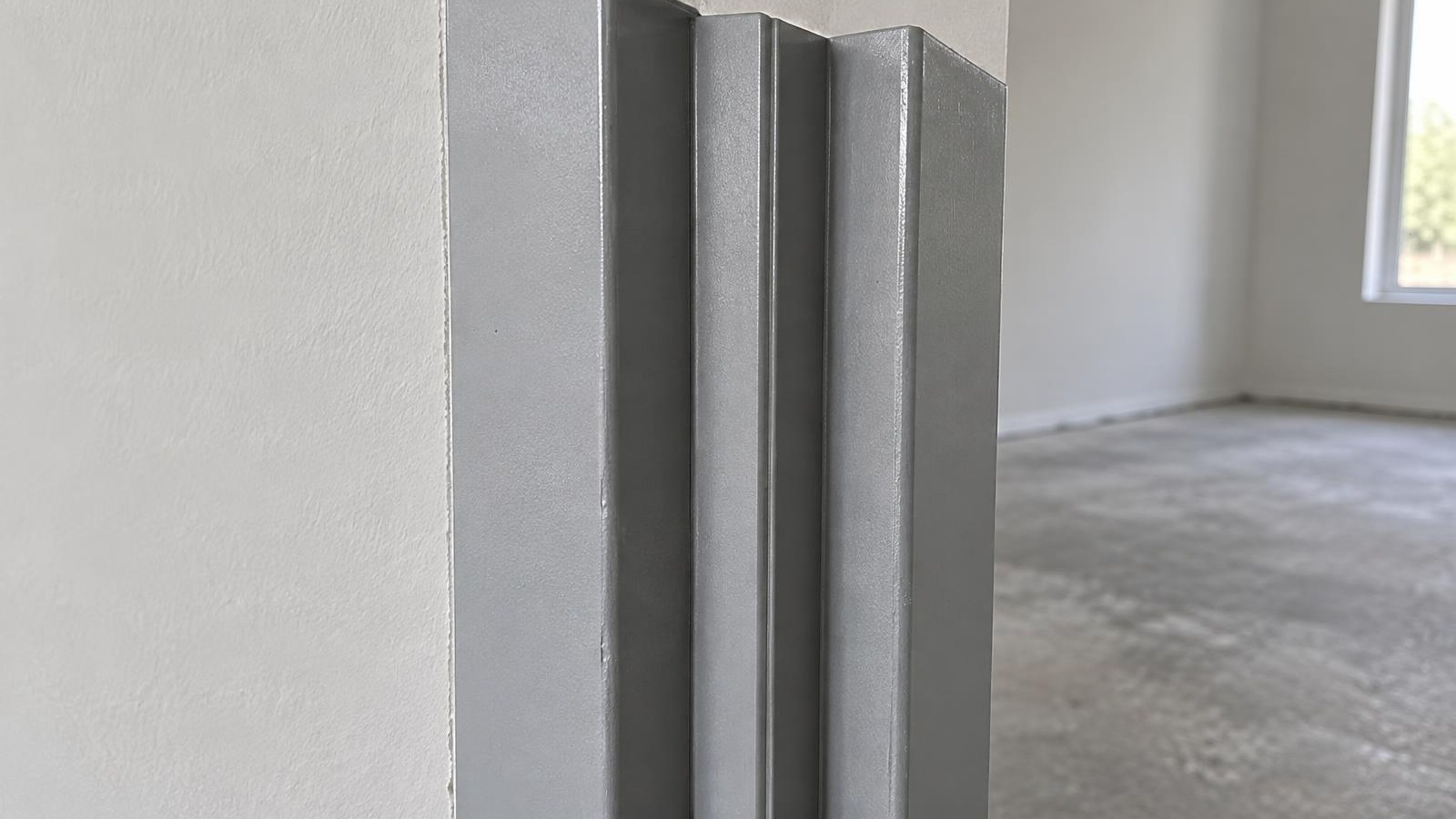
Door Frame Throat Size vs Jamb Depth: What to Measure

Door frame throat size is the inside distance between the returns or backbend returns of a hollow metal frame profile. Jamb depth measures the frame from face to face instead. Identify which dimension you have before ordering, because a wall measurement and an overall frame measurement are not interchangeable.
Quick answer: Label the wall measurement, the throat opening and the overall jamb depth separately on your frame request. Use the selected manufacturer's cross-section to confirm the relationship between them without applying a generic offset. Mills & Nebraska performs hollow metal frame fabrication in-house in Orlando. Providing the wall condition and a dimensioned profile at the review stage helps define the shop question before a frame size is selected.
What does door frame throat size measure?
Throat size describes the opening between the inward portions of the frame profile, not its overall outside depth. That distinction is visible in a cross-section, a drawing that shows the shape as if the frame member were cut across its length. Use that drawing to identify the measurement endpoints.
The Steel Door Institute's SDI 134-20 glossary defines throat as the distance between returns or backbend returns. A return extends inward from the frame face to the throat; a backbend extends from that return inside the throat. The folds help explain why two measurements across the same piece of steel can describe different dimensions.
For a wrap-around frame, the throat relates to the wall that the profile fits over. Label an outside-to-outside measurement as such. Mark the points on the section so another reviewer can identify exactly what you measured.
How is jamb depth different from throat size?
Jamb depth spans from one frame face to the other, measured perpendicular to the face. It is the overall profile dimension rather than the inside space between the returns. The SDI glossary also uses jamb width for this face-to-face dimension in hollow metal terminology.
Steelcraft's technical data manual, with a September 26, 2024 book revision, shows both dimensions on its frame-profile drawing. Its general-information section says the throat opening must be compatible with the wall to which the frame will attach. Read the drawn section and dimension labels together, not just the product's size description.
The manual documents variations in backbends and backbend returns across its profiles. That is a reason to check the actual drawing, not a reason to subtract an assumed amount from every frame size. A shorthand formula that fits one manufacturer's section may not describe another section's geometry.
When discussing standard welded frames, state whether your dimension represents the wall or the frame itself. If the quotation uses jamb depth and your field note uses throat, ask for a drawing showing the relationship between these distinct dimensions.
Should the throat equal the wall thickness exactly?
Confirm the required fit for the selected profile. The fit depends on the profile and its manufacturer's instructions. Establish the wall condition first, then confirm the selected section's required throat opening.
The SDI 134-20 glossary describes a wrap-around frame as fitting over the wall and gives its throat as nominally 1/8 inch larger than wall thickness. This applies to wrap-around frames, so check the selected profile.
Keep wall thickness distinct from the throat required by the proposed frame. Ask the supplier to identify the nominal size and the profile-specific fit in its drawing. If a catalog lists a wall-size designation, confirm what that designation means instead of assuming it is the measured inside dimension.
For knock-down frame options, review the intended wall condition with the selected profile. Resolve the field condition against the selected manufacturer's installation instructions and approved information.
What wall information should accompany the dimension?
Identify the wall assembly and the condition that your measurement represents. Describe whether the finishes are in place or whether the dimension comes from a proposed wall detail. This makes the request reviewable without presenting an unfinished measurement as the finished condition.
For an existing opening, note the material at each side and identify the surfaces used as measurement endpoints. For a planned opening, include the wall section showing the intended layers. If the field condition differs from the drawing, flag the difference instead of choosing whichever number appears closest to a stocked size.
You can organize the information as:
- Opening identifier and the relevant wall-detail reference.
- Observed or proposed wall thickness, with the endpoints identified.
- Manufacturer and profile being considered.
- Throat and jamb-depth labels on the cross-section.
- Any finish layers or field conditions still requiring confirmation.
Confirm which wall condition the frame is intended to fit. A wall number without its context leaves the supplier to guess what that number represents.
Hollow metal frames in commercial construction discusses the wider frame selection. Keep this measurement question separate from that broader choice of material, anchors and opening requirements.
Does a matching throat settle the rest of the frame order?
No. Matching the wall condition answers a dimensional-fit question, not every requirement for the opening. Review the remaining frame information independently before approving the complete order.
Confirm the opening size, selected profile, hardware preparations and anchoring information during the order review. Where a project has a fire or wind requirement, retain the specified assembly documentation. Confirm any proposed depth change against that documentation.
For frame fabrication services, submit the dimensioned section and unresolved questions together. Ask for the proposed profile to be identified in the response so the approved dimensions can be compared with the original wall information.
FAQs
Is throat size the same as the clear doorway width?
No. Throat describes a dimension across the frame profile associated with its wall fit. It does not describe the space available to pass through the doorway. Keep the profile section separate from the opening elevation, and identify each dimension by what it measures rather than using door size for both.
Can a photo replace a dimensioned cross-section?
A photo can show the visible wall and frame condition, but it does not establish the exact measurement endpoints or proposed profile dimensions. Include the drawing or a labeled measurement note as well. Ask for missing information to be resolved before relying on an image to select a frame size.
Does the word adjustable identify a particular size range?
Not by itself. SDI describes an adjustable frame as having a profile in two or more pieces to accommodate varying wall thicknesses. The applicable range still needs the selected product's documentation. Identify the wall condition and manufacturer's limits before ordering an adjustable frame.
What should you do if the order uses a different dimension name?
Request clarification before substituting numbers. Show where your measurement starts and ends, then ask the supplier to identify the corresponding dimension on its section. Keeping those endpoints visible is more dependable than assuming that a different label describes the same distance across the frame.
Contact Mills & Nebraska with your wall information and labeled frame section to review the throat and jamb-depth dimensions for a commercial opening.
Products and Services in This Article
- Standard Welded FramesFactory-welded frames fabricated in Orlando for new construction.
- Knock-Down FramesFrames that ship in pieces and assemble on site for renovations.
- Security FramesReinforced frames with anti-pry features and detention-grade options.
- Door & Frame FabricationFrame fabrication, door prep and Intertek labeling in Orlando.
Need Expert Guidance?
Our technical team is ready to help you navigate specifications, code requirements, and product selection for your project.