.jpg)
.png)




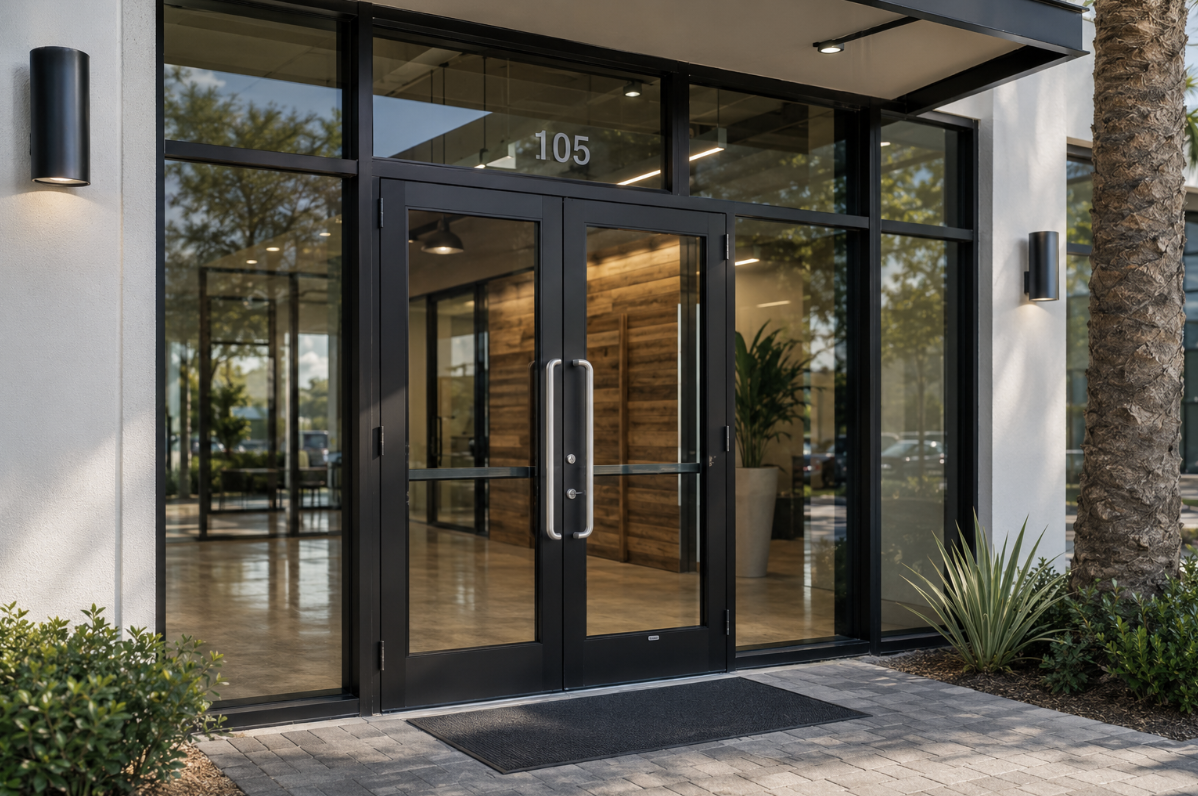
Commercial storefront doors play a critical role in the performance, security, and appearance of a building’s entrance. In Florida commercial construction, storefront door systems must do more than provide access—they must withstand daily traffic, meet code requirements, complement the building’s design, and perform reliably in harsh environmental conditions.
From retail centers and office buildings to healthcare facilities and mixed-use developments, the right commercial storefront doors create a welcoming entry while supporting safety, durability, and long-term functionality. A complete system includes more than just the door itself. It requires proper coordination between the door, frame, glass, and hardware to ensure performance from installation through years of use.
For contractors, architects, and property owners, selecting the right commercial store front door system can reduce maintenance issues, improve curb appeal, and help ensure code compliance across the entire opening.
Why Commercial Storefront Doors Matter in Modern Building Design
The Role of Storefront Doors in Security, Visibility, and First Impressions
The front entrance is often the first physical interaction someone has with a commercial building. A store front door sets the tone for the property, shaping first impressions while serving as a secure and functional entry point.
Commercial storefront doors are designed to balance visibility with performance. Large glass openings create openness and natural light while maintaining secure access for customers, employees, and tenants. Commercial glass entry doors are especially common in office buildings, retail spaces, restaurants, and hospitality environments because they combine modern aesthetics with practical functionality.
At the same time, storefront entrances must support locking hardware, closers, panic devices, and access control systems without compromising design or usability. A well-built commercial store front door delivers both visual appeal and dependable daily operation.
Durability and Daily Performance in High-Traffic Entrances
Storefront doors are opened and closed hundreds—or even thousands—of times per day. This constant use creates stress on hinges, closers, pivots, glass, and hardware. In high-traffic environments, durability matters.
A properly fabricated store front glass door system must be able to handle:
- Frequent opening and closing cycles
- Heavy pedestrian traffic
- Exposure to weather and moisture
- Daily wear on locks and closers
Commercial storefront doors designed with quality materials, coordinated hardware, and proper fabrication help minimize operational issues and reduce long-term maintenance over the life of the opening. This is especially important for businesses where the front entrance directly affects customer experience and building security.
How Florida’s Climate Impacts Storefront Door Systems
Florida’s climate creates additional challenges for storefront systems. Heat, humidity, rain, salt air, and wind exposure all impact how doors and hardware perform over time.
Exterior storefront openings often require corrosion-resistant materials, durable glazing systems, and properly specified hardware to withstand environmental exposure. Aluminum framing and tempered or insulated store front glass are frequently used because they provide durability while maintaining a clean appearance.
For buildings in coastal or storm-prone regions, storefront doors may also need to meet wind-load and impact performance requirements depending on the project location and design.
What Makes a Complete Commercial Storefront Door System
Doors, Frames, Glass, and Hardware Working Together
A storefront entrance is not just a door—it is a complete opening system. Each part must function together as a coordinated assembly.
A complete commercial storefront door system typically includes:
- Door panels
- Frames
- Glass or glazing
- Closers
- Locks
- Panic hardware
- Thresholds
- Weather seals
When these components are coordinated properly, the opening operates smoothly, seals correctly, and maintains long-term performance. Poor coordination between any part of the system can lead to alignment issues, premature wear, or operational failure.
Aluminum Storefront Systems and Glazing Options
Aluminum storefront framing is one of the most common systems used in commercial entrances because it offers strength, clean aesthetics, and compatibility with glass entry systems.
Common glazing options may include:
- Clear tempered safety glass
- Laminated safety glass
- Insulated glass units
- Impact-resistant glass
- Decorative or tinted glass
Store front glass is often selected based on performance requirements, energy goals, privacy needs, and building design.
Commercial glass entry doors can be configured with narrow stile or medium stile aluminum framing depending on the project requirements. Matching the correct framing and glazing package is essential for long-term performance.
Hardware Prep for Closers, Locks, Panic Devices, and Access Control
Hardware preparation is a critical part of any storefront door system. Closers, locks, and access control devices must be positioned accurately and reinforced correctly for the door to function properly.
Common storefront hardware includes:
- Surface or concealed closers
- Storefront locks
- Panic devices
- Pull handles
- Electric strikes
- Access control integration
Factory prep reduces field modifications and improves installation efficiency. This also helps reduce callbacks and service issues that often result from poor original coordination between the door, frame, glass, and hardware components.
Code Requirements for Commercial Storefront Doors in Florida
Florida Building Code and Wind Load Considerations
Storefront doors used in Florida must often meet specific building code requirements based on location, occupancy type, and exposure conditions.
Exterior openings may require:
- Wind-load resistance
- Proper anchoring
- Pressure-rated glazing
- Impact-resistant systems in designated zones
Selecting code-compliant commercial storefront doors helps maintain building performance while reducing the risk of costly replacement or failed inspections.
ADA Accessibility and Entrance Hardware Requirements
Commercial entrances must also meet ADA accessibility standards.
Requirements often include:
- Proper clear opening widths
- Accessible hardware height
- Lever or pull hardware usability
- Appropriate opening force
- Smooth thresholds and transitions
Commercial glass entry doors must be easy to operate for all users while maintaining security and code compliance.
Safety Glass, Egress, and Life-Safety Compliance
Safety glazing is required in many commercial storefront applications. Glass located near doors or within hazardous locations must meet safety glazing requirements.
Life-safety compliance may also require:
- Egress hardware
- Panic devices
- Proper exit widths
- Safe occupant movement during emergencies
These requirements are essential to the overall performance of the storefront system.
Common Problems with Commercial Storefront Doors
Misaligned Frames and Improper Hardware Coordination
Improper installation or poor fabrication can cause storefront frames to become misaligned, leading to doors that drag, bind, or fail to latch properly.
Hardware issues can also result from:
- Incorrect closer placement
- Improper lock alignment
- Poor reinforcement preparation
- Inaccurate field measurements
These problems often lead to premature maintenance or service calls.
Glass, Door, or Hardware Compatibility Issues
Storefront systems rely on compatibility between every component. If the glass, frame, or hardware are mismatched, operational problems become more likely.
This can result in:
- Broken or stressed glass
- Hardware failure
- Air or water infiltration
- Improper door closing or latching
In these situations, storefront system upgrades or replacement may be necessary to restore performance and maintain long-term reliability.
Installation Delays, Maintenance Problems, and Inspection Failures
Poor coordination can impact the entire construction schedule. Missing hardware, damaged store front glass, incorrect door sizing, or incomplete documentation can delay occupancy and trigger costly corrections.
Complete storefront systems help minimize these risks by arriving properly coordinated and ready for installation.
How Mills & Nebraska Supports Commercial Storefront Door Projects
Complete Door, Frame, Glass, and Hardware Coordination
Mills & Nebraska supports commercial storefront door projects through coordinated opening solutions designed around performance, compliance, and project requirements.
Our team helps align:
- Doors
- Frames
- Glass
- Hardware
- Opening details
This coordinated approach improves compatibility and simplifies installation.
Fabrication, Hardware Prep, and Code-Compliant Solutions
Proper hardware prep and fabrication are critical to storefront performance. Mills & Nebraska provides preparation for closers, locks, and access hardware while ensuring compatibility with the selected door and frame system.
This helps reduce field issues while supporting code-compliant performance for Florida projects.
Reliable Supply and Contractor-Focused Support Across Florida
Commercial projects require reliable timelines and clear coordination. Mills & Nebraska supports contractors with dependable sourcing, responsive communication, and product knowledge tailored to Florida construction demands.
Whether a project involves a new storefront entrance system, an entrance renovation, or a complete storefront package, our team helps keep projects moving efficiently.
Conclusion: Storefront Door Systems Built for Performance and Curb Appeal
Commercial storefront doors do more than create an entrance—they shape the appearance, performance, and functionality of the building itself. A properly coordinated storefront system improves curb appeal, supports security, meets code requirements, and performs reliably under heavy daily use.
For Florida commercial buildings, selecting the right storefront door system helps ensure long-term durability while creating a professional and welcoming entry.
Get Commercial Storefront Doors from Mills & Nebraska
If your project requires durable, code-compliant commercial storefront doors, Mills & Nebraska is ready to help. Our team provides complete storefront solutions including doors, frames, glass coordination, hardware preparation, and contractor-focused support built specifically for commercial construction in Florida.
Whether you need a new commercial store front door system or coordinated commercial glass entry doors for your project, Mills & Nebraska delivers solutions built for performance and long-term reliability.
Contact Mills & Nebraska today to request a quote for your next storefront project.
FAQs (Frequently Asked Questions)
What are commercial storefront doors?
Commercial storefront doors are entry systems typically used at retail stores, offices, restaurants, and commercial buildings. They often include aluminum framing, safety glass, and integrated hardware for security and daily operation.
What materials are used for storefront doors?
Common storefront door materials include aluminum framing, tempered safety glass, laminated glass, and commercial-grade hardware systems.
Do storefront doors need to meet Florida code requirements?
Yes. Commercial storefront doors in Florida may need to comply with Florida Building Code requirements for wind load, accessibility, safety glazing, and life-safety depending on the application.
Can storefront doors be repaired or replaced without replacing the entire system?
In some cases, yes. Depending on the condition of the frame, hardware, and surrounding opening, storefront doors or individual system components may be updated without replacing the entire assembly. Project requirements, code compliance, and compatibility with the existing storefront system should always be evaluated before moving forward.
Does Mills & Nebraska provide storefront door systems?
Yes. Mills & Nebraska supplies coordinated commercial storefront door systems including doors, frames, glazing coordination, hardware preparation, and code-compliant opening solutions designed for long-term performance in commercial construction projects.