


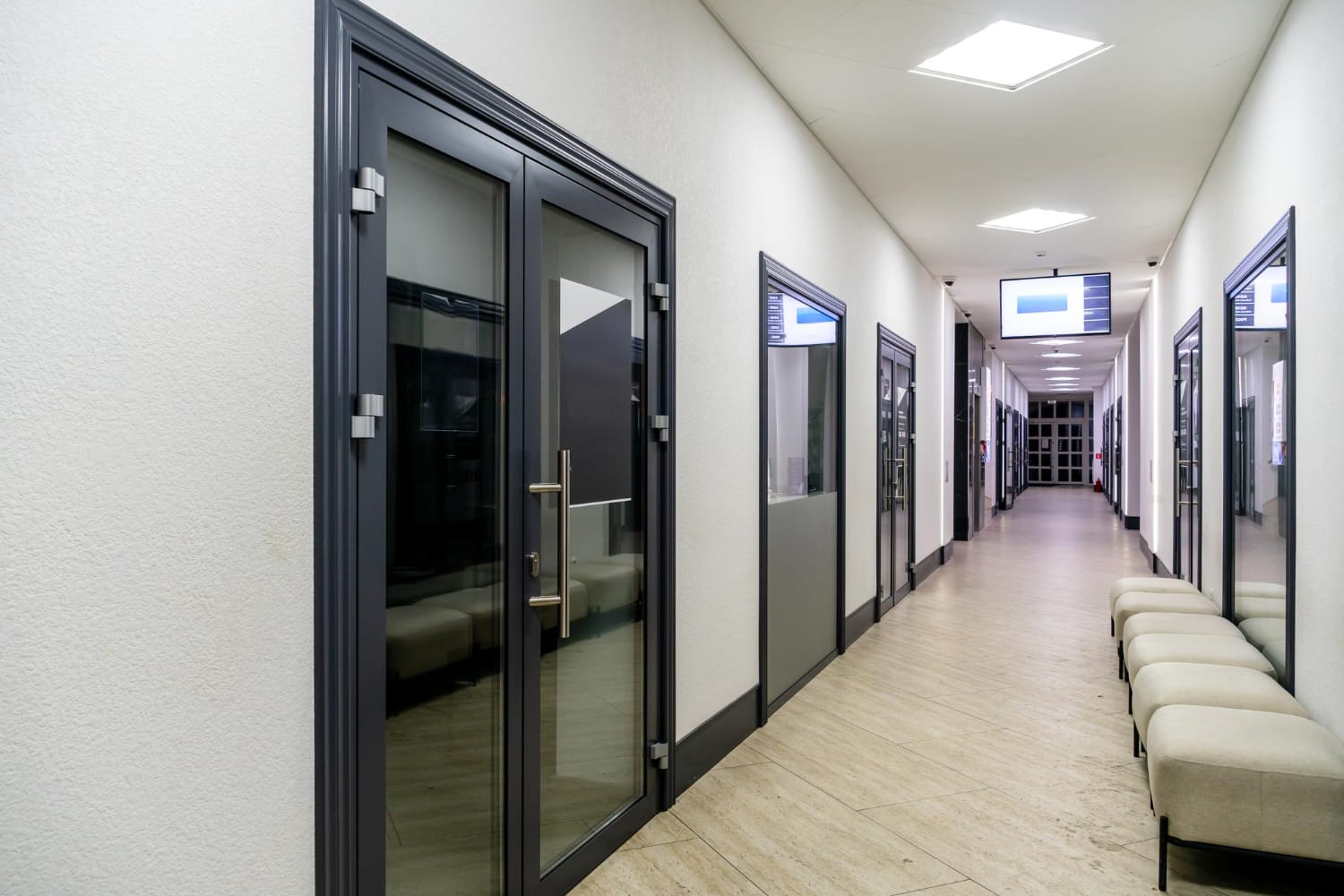
A Guide to Commercial Interior Doors for Offices: Materials, Codes, and Design

Commercial interior doors for offices are usually solid core wood or hollow metal doors chosen for appearance, sound control (measured by STC rating), fire rating where corridors or shafts require it, and ADA-compliant hardware. Mills & Nebraska provides office door, frame, and hardware packages for Florida projects.
Why Interior Doors Matter in Office Design
Enhancing Office Aesthetics and Branding
Commercial interior doors for offices play a much bigger role than simply separating rooms. They influence the overall aesthetics, flow, and brand image of a workplace.
Supporting Privacy, Security, and Productivity
Interior doors contribute directly to productivity and privacy. Acoustic door options reduce noise between meeting rooms, private offices, and collaborative spaces.
Meeting Safety and Code Requirements
Beyond appearance, office doors must comply with building codes, supporting safety and accessibility for all occupants.
Popular Materials for Commercial Interior Doors
Hollow Metal Doors: Durability and Fire Rating Options
Hollow metal doors are known for durability and resistance to wear, making them ideal for high-traffic commercial interiors.
Solid Core Wood Doors: Warmth and Acoustic Benefits
For offices prioritizing warmth and natural aesthetics, solid core wood doors provide a timeless solution and better sound control than hollow core doors.
Laminate and Veneer Finishes for Modern Workspaces
Laminate and veneer finishes offer a balance of style and price.
Specialty Doors: Acoustic, Glass, and Custom Designs
Specialty commercial interior doors are designed to meet specific needs such as enhanced sound control, added ventilation, or distinctive aesthetics.
Key Code and Compliance Considerations
ADA Accessibility Standards for Interior Doors
The 2010 ADA Standards require interior doors on accessible routes to provide a 32 inch minimum clear width, hardware operable without tight grasping, and no more than 5 pounds of opening force.
Fire-Rated Interior Door Requirements
Fire-rated doors, whether hollow metal, steel, or solid core wood, are tested to resist fire for a specific duration and must be self-closing and positive latching. See our fire ratings resource.
Acoustic Performance Ratings (STC) for Offices
Sound Transmission Class (STC) ratings indicate how well a door assembly blocks airborne sound. They are determined by laboratory testing to ASTM E90 and classified under ASTM E413, and the seals and threshold matter as much as the door itself.
Sustainability and LEED Considerations
Doors manufactured with environmentally responsible materials, such as FSC-certified wood, can contribute to LEED credits.
Design Choices That Elevate Office Interiors
Integrating Doors with Office Layouts and Partitions
The right interior door should integrate with your existing office layout.
Hardware Selection: From Handles to Access Control
Hardware plays a significant role in both usability and security. Mills & Nebraska can prep commercial interior doors for the exact hardware your project requires, including access control.
Custom Finishes and Branding Elements
Custom finishes, glass inserts, and branded design elements turn standard interior doors into visual focal points in office and retail spaces.
Conclusion: Bringing Style and Compliance Together
Commercial interior doors for offices do more than close off a space. They influence aesthetics, support productivity, meet code requirements, and reflect your brand.
FAQs
What types of materials are best for commercial interior doors in offices?
Popular materials include hollow metal for durability, solid core wood for warmth and sound control, and fiberglass for low maintenance.
Can commercial interior doors for offices be fire-rated?
Yes. Fire-rated interior doors are available in various durations and can be fabricated from steel, wood, or other rated materials.
Are acoustic doors worth it for office spaces?
For many offices, yes. Doors with higher STC ratings are well suited to conference rooms, executive offices, and other areas where privacy is essential.
Request a quote from Mills & Nebraska to start your next commercial project with confidence.
Products and Services in This Article
- Standard Welded FramesFactory-welded frames fabricated in Orlando for new construction.
- Exit Devices & Panic HardwareRim, vertical rod and mortise devices, including UL listed fire exit hardware.
- Knock-Down FramesFrames that ship in pieces and assemble on site for renovations.
- Commercial Door InstallationIn-house installation of doors, frames, hardware and Division 10 products.
Related Articles

Need Expert Guidance?
Our technical team is ready to help you navigate specifications, code requirements, and product selection for your project.