


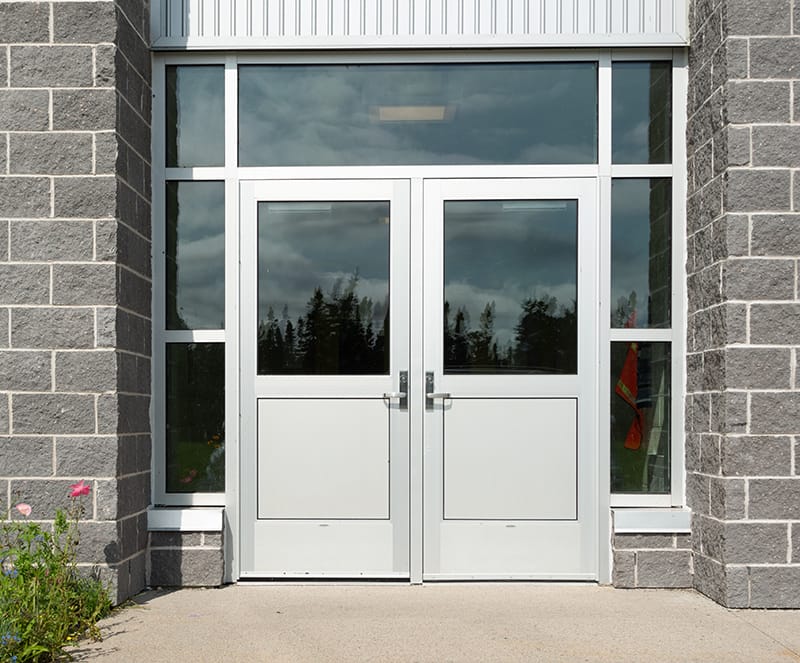
Custom Door Transoms: Design, Functionality, and Compliance

A door transom is a horizontal glass or solid panel installed above a door, within the same frame or opening, that brings in daylight, allows ventilation, or adds architectural height. In commercial buildings, transoms must follow the same rules as the door below: fire-rated openings need listed fire-rated glazing or panels, and glass in hazardous locations needs safety glazing. Mills & Nebraska fabricates hollow metal frames with transom sections for Florida projects.
What Are Door Transoms?
Door transoms are horizontal architectural elements typically installed above door openings, often with glass or other translucent materials. They serve both functional and aesthetic roles in commercial and residential construction. In modern buildings, a transom can be a fixed window, an operable ventilation panel, or a decorative glass element.
Types of Door Transoms in Commercial Construction
Common transom types include:
- Fixed glass transoms: non-operable units designed to admit light into a room or hallway.
- Transom window above door: positioned directly above the door head for visual symmetry.
- Operable transoms: equipped with hinges or louvers to assist with passive ventilation.
- Decorative or stained glass transom panels: used in interior lobbies, conference rooms, or places of worship.
- Safety glazed transoms: tempered or laminated glass where the lite falls in a hazardous location under the Florida Building Code.
Functional Benefits of Door Transoms
Transoms are not just decorative. They deliver real performance benefits. Glass transoms increase natural light flow between rooms or common areas, reducing the need for artificial lighting. Operable transoms can improve ventilation by allowing airflow between rooms without opening the main door.
Code Compliance and Design Integration
Commercial door and transom systems must meet the building codes that apply to the opening. In fire-rated openings, the transom frame must be labeled and any glass must be listed fire-rated glazing (standard tempered glass is not fire rated). Glass in hazardous locations must meet the safety glazing requirements of Florida Building Code Section 2406. Our fire ratings resource covers rated glazing basics.
Mills & Nebraska fabricates transom frames to project dimensions and coordinates rated glazing, glass and light kits, and labeling with the door package.
Material and Design Options for Custom Transoms
Choosing the right material is crucial. Hollow metal is the most common transom frame material in commercial work. Wood species such as mahogany and alder provide a warm, traditional feel for interior transom panels, and fiberglass panels resist moisture and heat.
Applications in Modern Commercial Construction
- Healthcare and Education: increase natural light and visibility in corridors
- Retail and Hospitality: create distinctive entrances that reinforce branding
- Corporate Offices: divide interior rooms with glass transoms to preserve an open feel
- Historic Renovations: match original arched openings using reproduction glass
Conclusion
Custom door transoms improve commercial architecture by blending form and function. Whether you're looking to improve natural lighting, increase ventilation, or add a distinctive design element, a well-crafted transom adds lasting value.
FAQs
What is a transom, and where is it typically installed?
A transom is a horizontal window or panel located above a door or window opening.
Are transoms only available in glass?
No. Transoms can also be solid panels of wood, metal, or fiberglass, or louvered for ventilation.
Do transoms work with ADA or fire-rated commercial doors?
Yes. A transom does not change the door's ADA requirements, and in fire-rated openings the transom frame, glazing, and panels must be labeled and listed for the required rating.
Request a quote or contact Mills & Nebraska to speak with one of our architectural hardware experts.
Products and Services in This Article
- Glass Light Kits & Vision LitesVision lites and light kits factory glazed into hollow metal and wood doors.
- Exit Devices & Panic HardwareRim, vertical rod and mortise devices, including UL listed fire exit hardware.
- Commercial Door HingesBall bearing, continuous, swing clear and power transfer hinges.
- Door Hardware SpecificationHardware consulting, scheduling and keying with an Architectural Hardware Consultant on staff.
Related Articles
Need Expert Guidance?
Our technical team is ready to help you navigate specifications, code requirements, and product selection for your project.